

Pain relief is a top priority for many individuals seeking alternative treatments. At CannabisDeals US, we’ve noticed a growing interest in Delta-9 THC for pain management. Delta-9 THC, a compound found in cannabis that has been gaining attention as a potential solution for pain relief without the harmful side effects of opioids.
This compound, has sparked curiosity among those looking for effective solutions to various types of discomfort. In this post, we’ll explore the potential of Delta-9 THC as a pain relief option, examining its mechanisms, effectiveness, and important considerations for use.
Introduction to the issue of opioid use and its harmful effects
The use of opioids has been a common practice in the medical field for managing pain. However, in recent years, it has become a major public health concern due to its harmful effects. Opioids, also known as narcotics, are a powerful class of drugs that work by binding to specific receptors in the brain and spinal cord to block pain signals. This results in a temporary relief from pain, making them an ideal solution for those suffering from chronic or severe pain.
However, the effects of opioids go beyond just pain relief. Opioids have addictive properties that can lead patients to develop dependence and eventually addiction. According to the National Institute on Drug Abuse (NIDA), an estimated 21-29% of patients who were prescribed opioids for chronic pain end up misusing them. Additionally, the overprescription of these drugs has contributed to the rise in illegal and non-medical use of opioids.
The opioid epidemic has also had a devastating impact on individuals, families, and communities. It is estimated that around 2 million people in the United States suffer from an opioid use disorder. Moreover, every day, approximately 130 Americans die from an opioid overdose.
What Is Delta-9 THC?
Explanation of Delta-9 THC and its natural properties
Delta-9 THC, also known as tetrahydrocannabinol, is a naturally occurring compound found in cannabis plants. It is one of the most well-known and studied cannabinoids in the cannabis plant, alongside CBD (cannabidiol). While CBD has gained popularity for its various potential health benefits, Delta-9 THC has been recognized for its psychoactive effects. However, there is much more to Delta-9 THC than just getting “high”.
Delta-9 THC interacts with the body’s endocannabinoid system (ECS) to produce therapeutic effects. The ECS is a network of receptors and neurotransmitters located throughout the body that helps regulate various bodily functions such as pain, mood, sleep, appetite, and immune response. These receptors are activated by both endocannabinoids produced naturally by the body and cannabinoids found in plants like Delta-9 THC. When Delta-9 THC binds to these receptors, it can produce a range of therapeutic effects.
One of the most significant advantages of Delta-9 THC is its natural properties. Unlike synthetic opioids, which are chemically produced in laboratories, Delta-9 THC is derived from a plant source. This means that it is considered a more natural and holistic approach to pain relief. Furthermore, Delta-9 THC does not have addictive properties like opioids do. Opioids work by binding to opioid receptors in the brain, which can lead to tolerance and dependence over time. In contrast, Delta-9 THC works differently by activating cannabinoid receptors in the ECS without causing physical addiction.
Moreover, studies have shown that Delta-9 THC has anti-inflammatory and analgesic properties. Inflammation is a natural response of the body to injury or infection, but chronic inflammation can lead to various health issues such as chronic pain. By reducing inflammation, Delta-9 THC may help alleviate pain caused by conditions like arthritis or fibromyalgia. Its analgesic properties also make it effective in reducing the sensation of pain. This is why Delta-9 THC has been increasingly used as a potential alternative to opioids for pain relief.
Additionally, Delta-9 THC has been found to have various other therapeutic benefits. These include its ability to stimulate appetite, which can be beneficial for individuals undergoing chemotherapy or those with eating disorders. It also has antiemetic properties, meaning it can help reduce nausea and vomiting. This makes Delta-9 THC a potential treatment for patients experiencing side effects from chemotherapy or other medications.
Chemical Structure and Properties
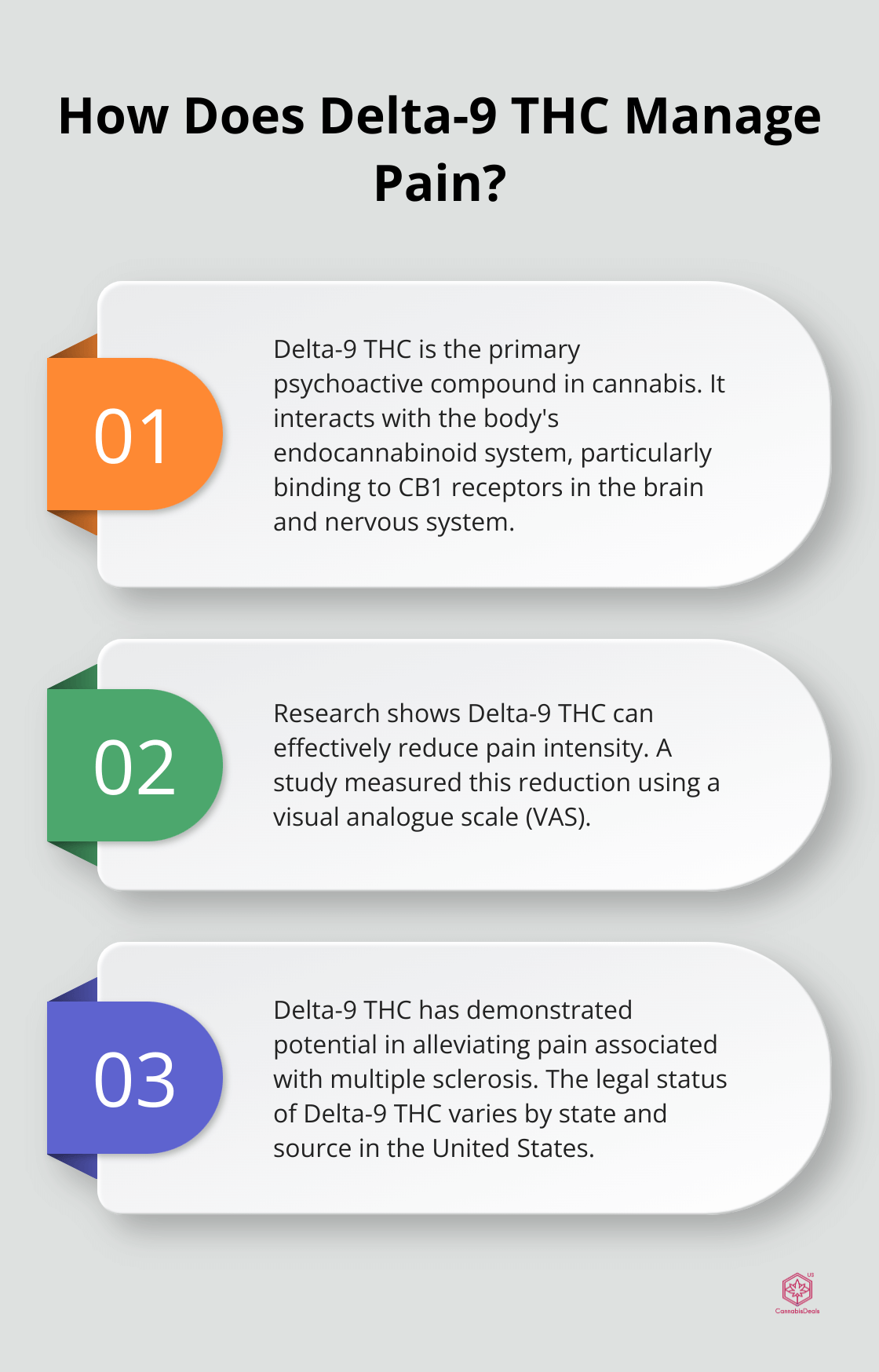
Delta-9 tetrahydrocannabinol (Delta-9 THC) stands as the primary psychoactive compound in cannabis plants. This molecule’s unique structure enables its interaction with the human body, resulting in various effects, including potential pain relief.
Interaction with the Endocannabinoid System
Delta-9 THC interacts with the body’s endocannabinoid system (ECS), a complex network that regulates numerous physiological processes. When Delta-9 THC enters the body, it binds to cannabinoid receptors (particularly CB1 receptors in the brain and nervous system). This binding action can alter neurotransmitter release and pain signaling pathways.
Pain Management Potential
Research indicates that Delta-9 THC may effectively manage different types of pain. A study showed that treatment with cannabis is effective in reducing the intensity of pain, as measured by a visual analogue scale (VAS). Additionally, research published in the European Journal of Pain demonstrated Delta-9 THC’s ability to alleviate pain associated with multiple sclerosis.
Legal Status in the United States
The legal status of Delta-9 THC in the U.S. varies by state and source. At the federal level, marijuana-derived Delta-9 THC remains a Schedule I controlled substance. However, the 2018 Farm Bill legalized hemp-derived Delta-9 THC products (containing less than 0.3% THC by dry weight).
This marijuana legalization map clearly defines the laws in each state and remains up-to-date with the latest changes on a monthly basis. It’s essential to check local laws before purchasing or using Delta-9 THC products.
Availability and Product Options
For those interested in exploring Delta-9 THC options, various products exist in the market (oils, edibles, vapes, etc.). Consumers should prioritize products from reputable sources that provide third-party lab testing results. These tests verify the product’s potency and purity, ensuring safety and efficacy.
As we move forward, let’s examine how Delta-9 THC compares to traditional pain medications and explore its potential mechanisms of action in pain management.
How Delta-9 THC Tackles Pain
Delta-9 THC shows promise in addressing various types of pain, positioning itself as a potential alternative or complement to traditional pain medications. Research indicates this cannabinoid’s effectiveness against chronic pain, neuropathic pain, and pain associated with conditions like multiple sclerosis and cancer.
Targeting Different Pain Types
Delta-9 THC appears particularly effective for neuropathic pain, which often resists conventional treatments. A study in the Journal of Pain found that low doses of vaporized cannabis significantly reduced neuropathic pain intensity. For cancer-related pain, a clinical trial reported that THC doses of 15-20 mg provided significant relief when taken orally.
Inflammatory pain, such as that associated with arthritis, may also respond to Delta-9 THC. The compound’s anti-inflammatory properties, combined with its analgesic effects, make it a dual-action option for conditions involving both pain and inflammation.
Mechanisms of Action
The pain-relieving effects of Delta-9 THC stem from its interaction with the endocannabinoid system. When THC binds to CB1 receptors in the brain and nervous system, it modulates pain perception and reduces pain signaling. Additionally, THC’s activation of CB2 receptors may contribute to its anti-inflammatory effects, further aiding in pain management.
THC may also influence pain indirectly by affecting mood and sleep. Many users report improved sleep quality and reduced anxiety when using THC, which can indirectly contribute to better pain management.
Comparison with Traditional Pain Medications
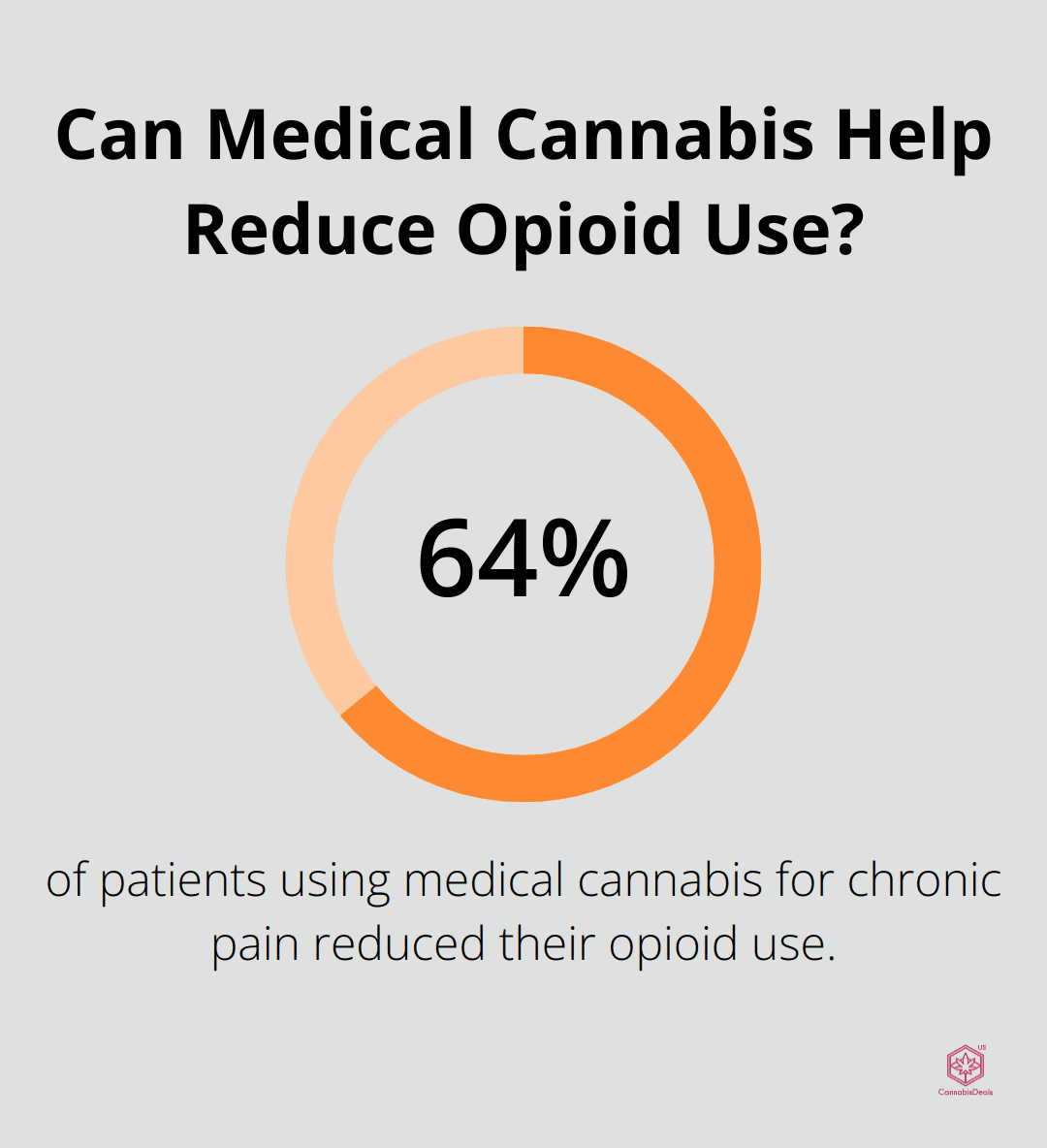
When considering Delta-9 THC as a pain management option, it’s important to understand how it compares to conventional pain medications. Unlike opioids (which carry a high risk of addiction and overdose), THC has a lower risk profile for dependence. A study in the Journal of Pain reported that patients using medical cannabis for chronic pain reduced their opioid use by 64%.
However, THC is not without drawbacks. Side effects can include dizziness, dry mouth, and cognitive impairment. These effects are generally milder than those associated with strong opioids but may still impact daily functioning for some users.
Non-steroidal anti-inflammatory drugs (NSAIDs) are another common pain treatment, but long-term use can lead to gastrointestinal issues and increased cardiovascular risk. While Delta-9 THC may offer a safer alternative for some patients, its long-term effects are still under study.
The effectiveness of Delta-9 THC compared to traditional pain medications can vary depending on the type and severity of pain. For some conditions (such as neuropathic pain), THC may outperform conventional treatments. However, for acute pain or post-surgical pain, traditional analgesics might still prove more appropriate.
As research continues to uncover the potential of Delta-9 THC in pain management, it becomes increasingly important to explore its effectiveness in clinical settings. The next section will delve into the current state of research and clinical evidence supporting the use of Delta-9 THC for pain relief.
Comparison of Delta-9 THC and opioids in terms of pain relief
Opioids have been the go-to solution for pain relief for many years, but their harmful effects have raised serious concerns. These prescription drugs can bring about addiction and dependency, leading to devastating consequences for individuals and society as a whole. As a result, researchers have been looking into alternative pain relief solutions, and one that has shown promise is Delta-9 THC.
Delta-9 THC, also known as tetrahydrocannabinol, is a compound found in the cannabis plant. Unlike opioids, it is a naturally occurring substance that works directly with the body’s endocannabinoid system. This system plays a crucial role in maintaining balance and regulating various bodily functions, including pain sensation. Hence, Delta-9 THC’s natural properties make it a potential alternative for managing pain.
Several studies have compared the effectiveness of Delta-9 THC and opioids in pain management, and the results are quite promising. One study published in the Journal of Pain showed that patients using Delta-9 THC experienced a significant reduction in pain intensity compared to those taking a placebo. In comparison, another study found that Delta-9 THC provided better pain relief than morphine among cancer patients.
Both Delta-9 THC and opioids work by interacting with the body’s endocannabinoid system; however, they do so in different ways. Opioids bind to receptors in the brain and spinal cord, blocking pain signals from reaching the brain. While this mechanism may provide immediate relief, it also comes with side effects such as drowsiness, nausea, and constipation. On the other hand, Delta-9 THC interacts with cannabinoid receptors in the body, which are responsible for regulating pain perception. This allows for more targeted and natural pain relief without causing adverse side effects.
One of the biggest concerns with opioid use is its addictive potential. Many people who are prescribed opioids for pain management end up developing dependency issues, which can lead to addiction. This is because opioids can produce feelings of euphoria, making them not only effective in relieving pain but also highly addictive. On the other hand, Delta-9 THC has not shown the same level of addiction potential. In fact, a study published in The Clinical Journal of Pain found that patients using Delta-9 THC for chronic non-cancer pain did not develop a tolerance to it over a 12-month period.
What Does Research Say About Delta-9 THC for Pain?
Research on Delta-9 THC for pain management has expanded significantly in recent years. Multiple studies have examined its effectiveness for various pain conditions, providing valuable insights for patients and healthcare providers.
Chronic Pain Management
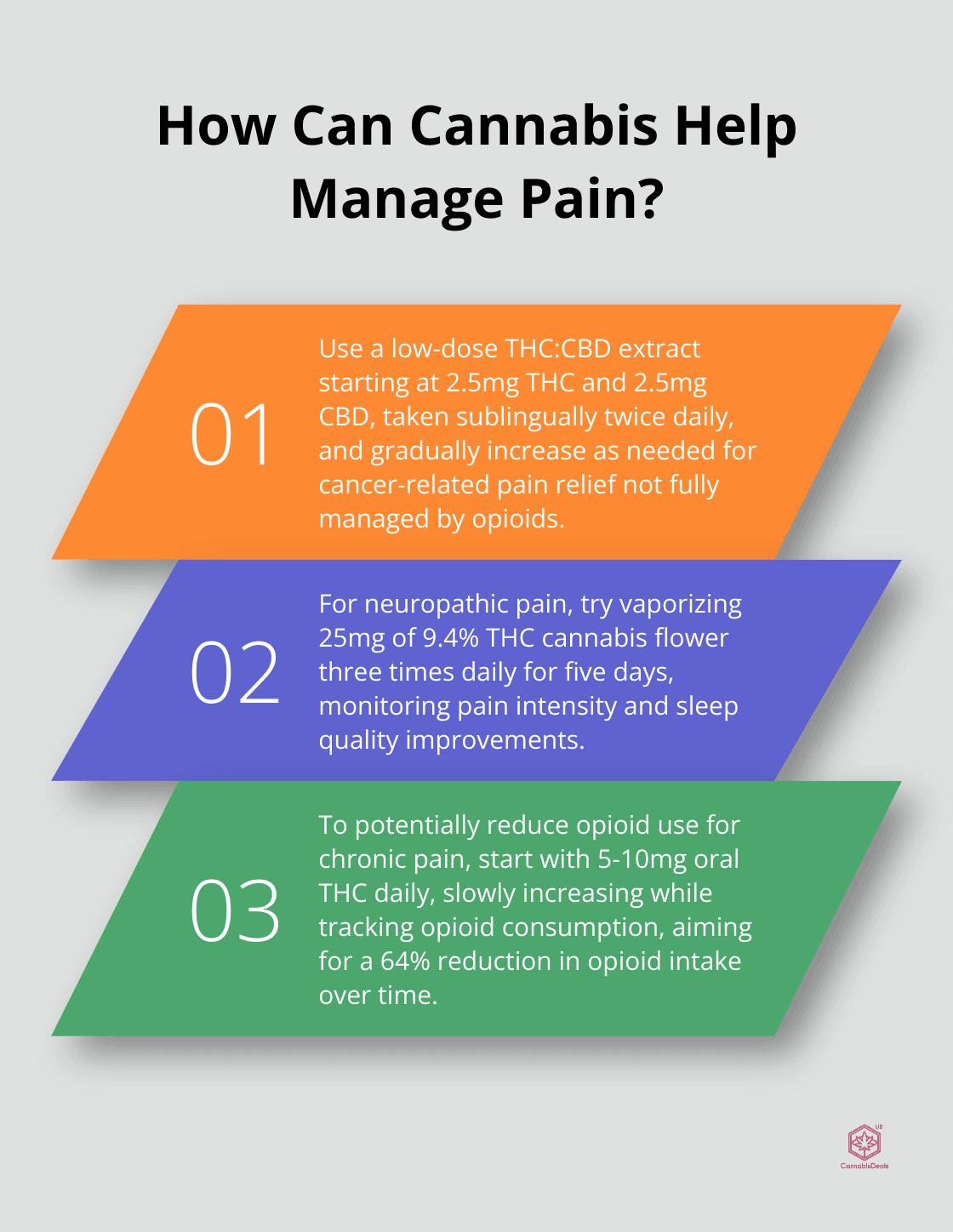
A 2015 study published in the Journal of Pain found evidence for the use of low-dose medical marijuana in refractory neuropathic pain when used in conjunction with traditional analgesics. This suggests that Delta-9 THC could potentially serve as an adjunct therapy for chronic pain management.

The University of Michigan conducted a survey in 2016 involving 244 medical cannabis patients with chronic pain. The results were remarkable: patients reported a 64% reduction in their opioid use after initiating cannabis treatment. This suggests that Delta-9 THC could potentially serve as an opioid-sparing agent, addressing concerns about opioid addiction and overdose.
Neuropathic Pain Relief
Neuropathic pain, often resistant to conventional treatments, has shown promising responses to Delta-9 THC. A randomized, double-blind, placebo-controlled trial published in CMAJ in 2010 focused on patients with post-traumatic or postsurgical neuropathic pain. The study found that a single inhalation of 25mg of 9.4% THC herbal cannabis three times daily for five days reduced pain intensity, improved sleep, and was well-tolerated.
Cancer-Related Pain
Pain management is essential for cancer patients’ quality of life. A study published in the Journal of Pain and Symptom Management in 2010 examined the effects of THC:CBD extract and THC extract in patients with intractable cancer-related pain. The study showed that THC:CBD extract is efficacious for relief of pain in patients with advanced cancer pain not fully relieved by strong opioids.
Side Effects and Considerations
While Delta-9 THC shows promise for pain relief, it’s important to consider potential side effects. Common adverse effects reported in studies include dizziness, dry mouth, nausea, and cognitive impairment. A systematic review published in the Canadian Medical Association Journal in 2008 found that 23% of participants in cannabinoid trials withdrew due to adverse effects (compared to 8% in control groups).
Cognitive effects are a particular concern, especially for older adults or those with cognitive impairments. A study in the journal Neurology in 2014 found that medical cannabis use was associated with cognitive impairment in older chronic pain patients, particularly in executive function and memory.
The long-term effects of Delta-9 THC use for pain management require further investigation. A 2017 report from the National Academies of Sciences, Engineering, and Medicine concluded that while cannabis use for chronic pain is supported by good-quality evidence, more research is needed on long-term outcomes and potential risks.
For those interested in exploring Delta-9 THC for pain relief, Delta 9 THC Gummies have gained popularity as a convenient and precisely dosed option.
Current state of opioid use and the need for alternative pain management solutions
The current state of opioid use is a cause for concern, not only in the United States but also around the world. As the number of opioids being prescribed continues to rise, so does the number of people becoming addicted to these medications. This has led to an opioid epidemic, with addiction and overdose deaths reaching alarming levels.
One of the main reasons for this epidemic is the over-prescription of opioids. In many cases, these powerful painkillers are prescribed for conditions that could be managed with non-opioid alternatives. This has caused a widespread abuse of opioids, as people continue to seek relief from their pain by turning to these highly addictive medications.
The consequences of opioid use and addiction extend beyond just the individuals taking these medications. Families are being torn apart, and communities are suffering as a result. The economic burden of treating opioid addiction is also significant, as healthcare systems struggle to cope with the increasing number of cases.
In light of this crisis, there is a growing need for alternative pain management solutions that do not carry the same risks as opioids. People are searching for safer and more natural options to manage their pain without fear of becoming addicted or experiencing harmful side effects.
This demand has led researchers to explore new avenues for pain relief, including Delta-9 THC. This compound, found in cannabis plants, has shown potential in relieving pain without the risks associated with opioids. It works by binding to cannabinoid receptors in the body’s endocannabinoid system, which regulates various bodily functions, including pain perception.
Numerous studies have been conducted on the effectiveness of Delta-9 THC in managing pain, and the results have been promising. Research has shown that it can provide relief for chronic pain conditions such as arthritis, multiple sclerosis, and neuropathic pain. Furthermore, its natural properties make it an attractive option for those looking for a safer alternative to opioids.
Incorporating Delta-9 THC as a pain management solution has the potential to not only provide safe and effective relief but also reduce the societal and economic burden of opioid addiction. By offering a natural alternative, it can address the underlying issues of opioid use and help combat the current crisis.
Delta-9 THC shows potential as a pain relief solution, particularly for chronic and neuropathic pain. Research indicates its effectiveness in reducing pain intensity, improving sleep quality, and potentially decreasing opioid use. However, patients should consult healthcare providers before incorporating Delta-9 THC into their pain management regimen to ensure safe and effective use.
Conclusion: The potential of Delta-9 THC as a safe and natural alternative to opioids for pain relief.
In conclusion, the use of Delta-9 THC holds great potential as a safe and natural alternative to opioids for pain relief. The current opioid crisis has shed light on the harmful effects of these medications, including addiction and overdose. As a result, there is a growing need for effective and safer pain management solutions. Delta-9 THC, a compound found in cannabis plants, has been gaining attention for its potential to provide pain relief without the negative side effects associated with opioids.
The future of Delta-9 THC in pain management looks promising, but more research is needed. Long-term studies on its efficacy and safety are necessary to fully understand its role in pain treatment. Research into optimal dosing, delivery methods, and potential combinations with other cannabinoids could further enhance its therapeutic potential.
For those interested in exploring Delta-9 THC for pain, finding reliable sources of information and high-quality products is important. CannabisDeals US offers a comprehensive platform for comparing various cannabis products, including those containing Delta-9 THC for pain relief. Their database and real-time comparisons can help users make informed decisions about their pain management options.
Last Updated on April 16, 2026 by CannabisDealsUS Editorial Team