
Online cannabis prices are set by individual retailers based on product cost, brand positioning, and competitive pressure – not by a central exchange or government standard. The listed price is rarely the lowest available: discount codes, bundle pricing, and promotional cycles regularly reduce effective prices 10 to 35% below list. Understanding how pricing works helps you evaluate whether a deal is genuinely competitive or just marketed as one. Price data across 35,000+ products from 200+ verified US online retailers is tracked weekly by the CannabisDealsUS Cannabis Price Index.
How Online Cannabis Prices Are Set
Each retailer sets its own prices independently. There is no national pricing standard for hemp-derived cannabinoids. Prices reflect three main inputs:
| Input | How it affects price |
|---|---|
| Product cost | Raw material, extraction, and manufacturing costs set the floor. THCA and live resin cost more to produce than Delta-8 distillate. |
| Brand positioning | Established brands charge a premium over generic equivalents – often 30 to 80% for the same product type. |
| Competitive pressure | In saturated categories like Delta-8 vapes, price competition is intense. In newer categories like mushroom products, pricing is still being established. |
Listed Price vs Effective Price
The listed price is what appears on the product page. The effective price is what the buyer actually pays after discounts. The gap between the two is significant. Based on CPI data from March 2026, the average discount rate across tracked categories was 8.2%, with average discount depth of 36.1% on products showing a marked-down price. A product listed at $50 with a visible discount was typically available at around $32.
| Price type | What it represents | When it matters |
|---|---|---|
| List price | Retailer’s stated retail price | Baseline for discount calculation |
| Sale price | Publicly displayed discounted price | What most buyers see and pay |
| Code-gated price | Additional discount via coupon code | Often an extra 10 to 15% off sale price |
| Effective price | Actual transaction price after all discounts | The only price that matters for value comparison |
“The listed price tells you where a retailer wants to position a product. The effective price tells you what the market will actually bear. Tracking both is what separates market data from marketing copy.”
– Theo Valmis, Founder, CannabisDealsUS
How to Calculate Per-Unit Value
Comparing package prices directly is misleading. The correct unit varies by category:
| Category | Correct unit | Example |
|---|---|---|
| THC vapes | Price per mg THC | $40 cart / 800mg THC = $0.05/mg |
| THC edibles | Price per mg THC | $25 / 500mg total = $0.05/mg |
| CBD oil | Price per mg CBD | $45 / 1500mg = $0.03/mg |
| THC flower | Price per gram | $35 / 3.5g = $10/g |
| Pre-rolls | Price per gram | $12 / 1g = $12/g |
Why Prices Change Week to Week
- Promotional cycles – 420, Green Wednesday, Black Friday produce the deepest discounts of the year
- Inventory positioning – retailers discount to clear overstock before new product launches
- New product introductions – new SKUs enter at launch prices that stabilize over time
- Category competition – new entrants compress prices across existing listings
- Regulatory signals – uncertainty around specific cannabinoids can shift demand and pricing rapidly
For weekly data, see the Cannabis Price Index. For monthly patterns, see Cannabis Price Trends by Month.
Frequently Asked Questions
Why is the same product priced differently across retailers?
Each retailer sets prices independently. A 20 to 40% spread between the cheapest and most expensive retailer for the same product type is common in the online hemp market.
Do cannabis prices go up or down over time?
It depends on the category. CBD oil has shown sustained list price compression as the market matures. THC categories are more volatile, influenced by THCA growth, regulatory signals, and new product launches.
What is the cheapest time to buy cannabis online?
The 420 window (mid-to-late April) and Green Wednesday / Black Friday (late November) consistently produce the deepest effective prices of the year. See Cannabis Price Trends by Month.
How do I know if a cannabis deal is actually good?
Normalize to the correct per-unit metric, then benchmark against Online Cannabis Price Benchmarks.
Related Pricing Guides
- Cannabis Price Index – Weekly Benchmark Data
- Online Cannabis Price Benchmarks
- Cannabis Price Trends by Month
- Which Online Dispensaries Have the Best Prices?
- Cannabis Pricing Online
Current Market Prices: See It In Practice
Live prices across THC vape and CBD oil categories – two of the most actively traded segments in the US online hemp market. Prices updated daily from 200+ verified merchants and brands.
| Product | Merchant | Price | Discount | Key Specs | Deal |
|---|---|---|---|---|---|
Best Value
 1000mg D8 Vape Cart - Blue Dream - Hybrid - 1ml - 10X (1,000mg)
 | Diamond CBD |
$13.79
| 40% off | 1ml | 1000mg | Hybrid | View Deal |
Best Discount
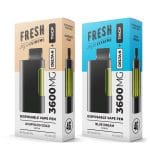 THCP, D8 Vape Pens Bundle - 3600mg - Fresh
 | Diamond CBD |
$51.99
| 60% off | 3600mg | View Deal |
Best Discount
 THCP, D8 Vape Pens Bundle - 2700mg - Chill Extreme
 | Diamond CBD |
$71.99
| 60% off | 2700mg | View Deal |
Best Discount
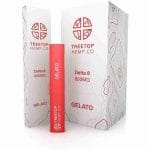 TreeTop Gelato 1g Delta 8 Disposable
 | D8 Super Store |
$19.95
| 56% off | 1g | View Deal |
Cheapest
 1-Gram THCP Vapes
 | Utoya (US) | $11.99 | — | — | View Deal |
Top 5 deals shown. Prices tracked across 200+ verified merchants and brands.
| Product | Merchant | Price | Discount | Key Specs | Deal |
|---|---|---|---|---|---|
Best Value
 MediPets CBD Oil for Large Dogs - 600MG
 | Diamond CBD |
$20.24
| 55% off | 600mg | View Deal |
Best Discount
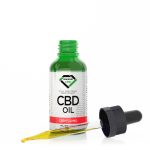 1,500mg Full Spectrum CBD Oil - Diamond CBD
 | Diamond CBD |
$43.99
| 60% off | 500mg | Full Spectrum | View Deal |
Best Discount
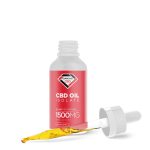 1,500mg CBD Isolate Oil - Diamond CBD
 | Diamond CBD |
$43.99
| 60% off | 500mg | View Deal |
Best Discount
 2,000mg D8 & Full Spectrum CBD Oil - Chill Plus
 | Diamond CBD |
$47.99
| 60% off | 000mg | Full Spectrum | View Deal |
Cheapest
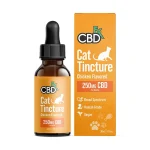 CBDfx Cat Tincture 250mg Chicken Flavored
 | Olofly (US) |
$11.99
| 20% off | 250mg | View Deal |
Top 5 deals shown. Prices tracked across 200+ verified merchants and brands.
Published by Theo Valmis, Founder, CannabisDealsUS. Dataset DOI: 10.5281/zenodo.18351089. CC BY-NC 4.0.
Last Updated on July 28, 2026 by Theo Valmis
Ready to Find the Best Deals?
The CannabisDealsUS Price Index tracks live discounts across 200+ verified merchants and brands. Compare prices before you buy.
Compare Prices →All Deals →