WHAT YOU’LL LEARN
What THC vape cartridges are
A quick explanation of both formats and how they deliver THC.
Table of Contents
ToggleHow THC vape cartridges work
Key differences in effects, dosing, smell, cost, and overall experience.
Step by step guide to using a cartridge
A simple framework to decide which option fits your needs and habits.
Common mistakes and how to avoid them
Frequent errors people make when switching between vape and flower.
Tools and products you may need
Devices and basic accessories required for each format.
FAQs
Clear answers to common questions about safety, strength, and usage.

What THC vape cartridges are
A THC vape cartridge is a prefilled container of cannabis extract designed to
attach to a vape battery. Most cartridges use a standard 510 thread connection,
allowing them to work with many batteries.
Inside the cartridge, cannabis oil is stored in a reservoir and delivered to a
heating element through a wick or porous core. When heated, the oil vaporizes
and is inhaled through the mouthpiece.
How THC vape cartridges work
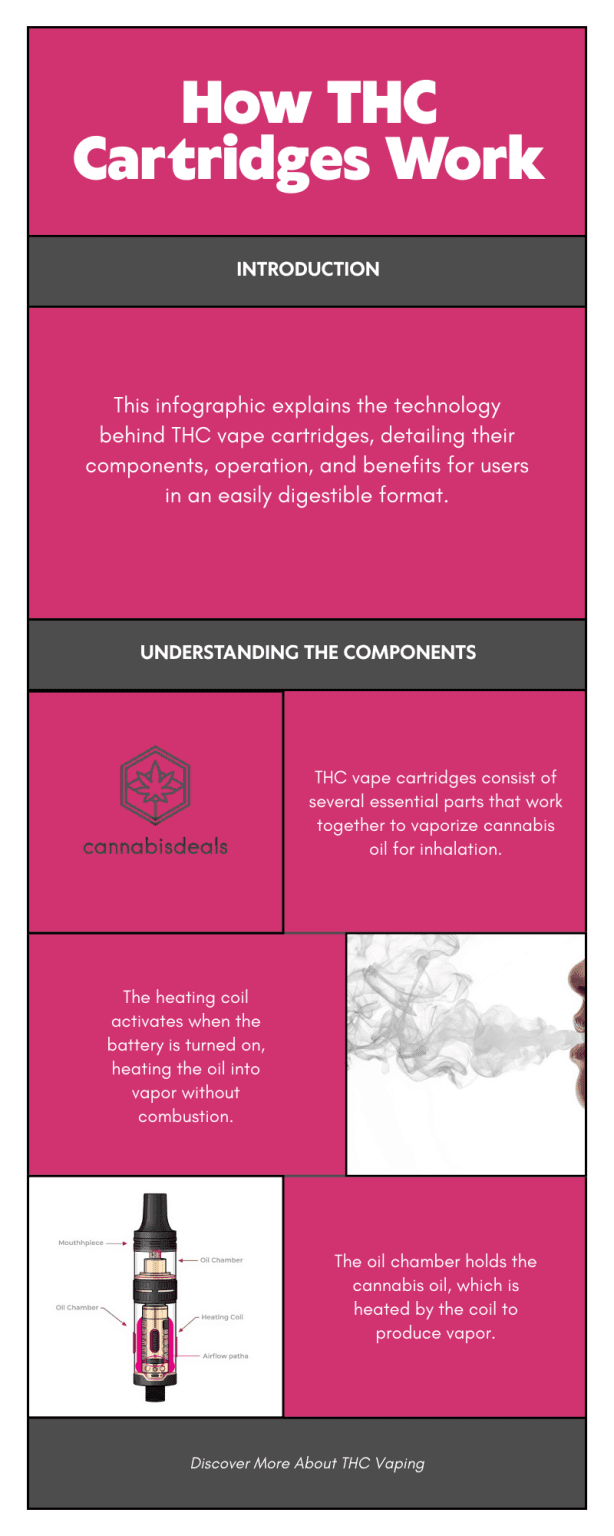
Key internal components
- Mouthpiece that directs vapor
- Airflow channels that mix air with vapor
- Oil reservoir holding cannabis extract
- Wick or porous core that feeds oil to the coil
- Heating coil that vaporizes the oil
- Base connector that transfers power from the battery
What happens when you inhale
When you inhale or press the battery button, power flows to the coil. The coil
heats a thin layer of oil, turning it into vapor. Air enters through intake
holes, mixes with vapor, and travels up to the mouthpiece.
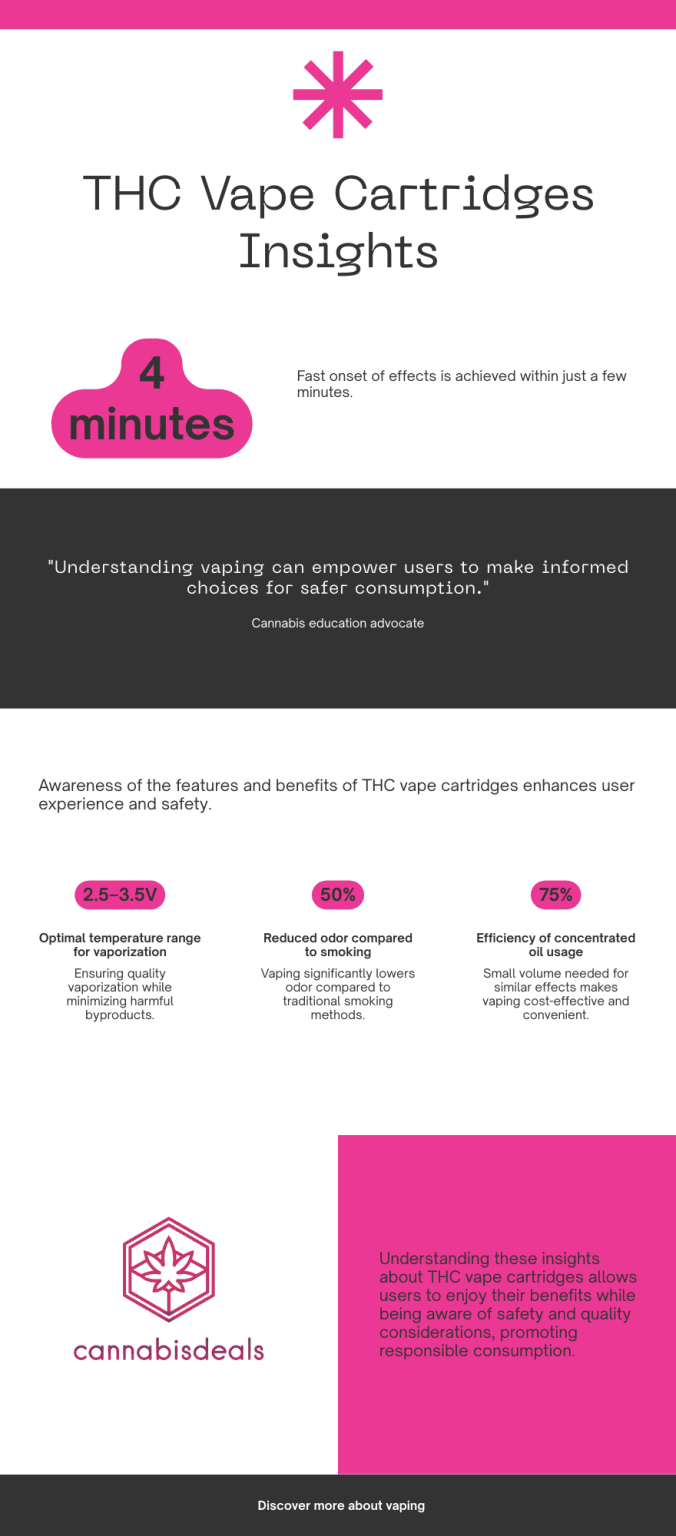
Why voltage matters
Voltage controls how hot the coil gets. Lower voltage preserves flavor and
reduces harshness, while higher voltage creates thicker vapor but increases
the risk of burning oil.
CannabisDealsUSVoltage Settings and What They Do
Use this table to match voltage to flavor, vapor strength, and comfort. Start low and move up only if needed.
| Voltage range | Vapor and feel | Best for | Watch outs |
|---|---|---|---|
| 1.8 to 2.2 V | Light vapor. Smooth inhale. Maximum terpene flavor. | First session, low tolerance, live resin, flavor focused use. | May feel weak with thick oils. Longer warm up needed in cold rooms. |
| 2.2 to 2.6 V | Balanced vapor. Clear flavor. Comfortable throat hit. | Most users, everyday sessions, better consistency without harshness. | Chain hitting can still overheat small coils. |
| 2.6 to 3.0 V | Thicker clouds. Stronger immediate effect feel. Slightly less flavor. | Distillate, quick sessions, users who want more vapor per puff. | Higher risk of harsh hits and faster oil darkening. |
| 3.0 to 3.4 V | Very dense vapor. More heat. Flavor drops faster. | Thick distillate carts that feel too tight at lower voltage. | Burnt taste risk rises. Oil can degrade faster. More coughing for many users. |
| 3.4 V and up | Maximum heat. Big clouds. Often harsh. Minimal terpene flavor. | Rarely needed. Only if the cart and coil are designed for higher power. | Highest risk of burnt coil, leaking, and throat irritation. Not recommended for most carts. |

Common mistakes and how to avoid them
- Using high voltage immediately
- Overtightening the cartridge
- Taking very hard pulls
- Leaving cartridges in hot environments
- Storing cartridges sideways
- Ignoring dirty battery contacts
CannabisDealsUSTHC Cartridge Types Compared
An unbiased breakdown of distillate, live resin, and CO₂ cartridges based on extraction, flavor, effects, and real-world use.
| Feature | Distillate | Live Resin | CO₂ Oil |
|---|---|---|---|
| Extraction method | Highly refined via multi-step distillation. | Hydrocarbon extraction from fresh frozen flower. | Supercritical CO₂ pressure extraction. |
| Source material | Dried and cured cannabis. | Fresh frozen cannabis. | Typically dried flower. |
| THC potency | Very high and consistent. | High but naturally variable. | Moderate to high. |
| Flavor | Neutral base with added terpenes. | Bold, strain-accurate flavor. | Clean and mild. |
| Effect profile | THC-forward and predictable. | Balanced and nuanced. | Smooth and functional. |
| Clogging risk | Higher in cold conditions. | Lower. | Moderate. |
| Best for | Potency seekers and budget buyers. | Flavor and strain enthusiasts. | Everyday balanced sessions. |
Step by step guide to using a cartridge
- Confirm the cartridge fits your battery
- Inspect for leaks or cracks
- Screw the cartridge on gently
- Set the battery to low voltage
- Take a short, gentle draw
- Increase voltage slowly if needed
- Use smooth, steady inhales
- Store the cartridge upright
- Clean battery contacts regularly
Tools and products you may need
Interactive tool
THC Cartridge Troubleshooter
Pick a symptom to see likely causes and safe fixes for how THC vape cartridges work in real life.
Safety note: if the battery gets unusually hot, smells like burning plastic, or shows damage, stop using it.
Choose a symptom, then click Show fixes.
THC Vape Cartridge Components Explained
This table breaks down each core cartridge part, what it does, and how it affects vapor, flavor, and reliability.
| Component | What It Does | Why It Matters | Common Issues |
|---|---|---|---|
| Mouthpiece | Channels vapor from the coil to your inhale. | Design affects airflow smoothness and condensation buildup. | Clogging, spitback, residue buildup. |
| Airflow Path | Allows air to pass through the cartridge during inhalation. | Balanced airflow controls vapor density and draw resistance. | Hard pulls, restricted airflow, inconsistent vapor. |
| Oil Chamber | Holds the THC oil or extract. | Chamber size and material affect heating consistency. | Leaking, darkening oil, oxidation. |
| Coil / Atomizer | Heats oil and turns it into vapor. | Coil material and resistance determine flavor and efficiency. | Burnt taste, weak vapor, coil burnout. |
| Wick | Feeds oil from the chamber to the coil. | Proper wicking prevents dry hits and flooding. | Dry hits, spitback, uneven vapor. |
| Center Pin | Transfers power from the battery to the coil. | Poor contact causes misfires or no vapor. | No hit, intermittent firing, connection issues. |
| Battery (510) | Supplies power to heat the cartridge. | Voltage control directly affects vapor strength and flavor. | Overheating, weak hits, incompatible output. |
Interactive tool
THC Vape Cartridge Setup and Safety Checklist
Use this quick checklist before your first session to reduce clogs, leaks, burnt hits, and connection issues.
FAQs about THC vape cartridges
A THC vape cartridge is a prefilled glass or plastic container holding concentrated cannabis oil. It attaches to a battery-powered vape pen using a 510 thread connection and heats the oil to create inhalable vapor without combustion.
Most use 510 thread batteries, but always check compatibility before use.
Legality depends on your location. THC cartridges are legal in states with recreational or medical cannabis programs but remain federally illegal in the U.S. Always verify your local laws before purchasing or using THC products.
Attach the cartridge to your battery by screwing it on gently. Start with the lowest voltage setting, then press the button (if applicable) or simply inhale. Take slow, 3-5 second draws and wait a few minutes between puffs to gauge effects.
No need to hold vapor longer than 2-3 seconds. THC is absorbed almost instantly through lung tissue. Holding it longer only irritates your lungs without increasing effects.
Take slow, steady draws for 3-5 seconds. Longer draws don’t increase effects significantly but can overheat the coil and waste oil. For beginners, start with 2-3 second puffs.
Start at 2.4-2.8V for optimal flavor and smooth vapor. Medium settings (3.0-3.3V) produce more vapor, while high settings (3.5-4.0V+) create thicker clouds but risk burning the oil and harshness. Lower voltage preserves terpenes and extends cartridge life.
Burnt taste usually comes from too much heat. Lower the voltage and shorten
your draws.
Thick oil, cold temperatures, or hard pulls can cause clogs. Store upright and
inhale gently.
Leaks occur from overtightening (which cracks seals), storing cartridges horizontally, temperature fluctuations, damaged O-rings, or defective manufacturing. Always store upright and hand-tighten only—never force the connection.
Small bubbles are normal—they show the oil is moving toward the heating element as you vape. Large bubbles or air pockets might indicate a manufacturing defect or that the cartridge wasn’t filled properly.
Check these common issues: 1) Dead battery, 2) Loose connection between cartridge and battery, 3) Clogged airflow, 4) Battery contacts need cleaning, 5) Defective cartridge. Try cleaning the connection points with a cotton swab and isopropyl alcohol.
Distillate cartridges contain highly refined THC oil (often 85-95% THC) with added terpenes for flavor. Live resin cartridges use fresh-frozen cannabis to preserve natural terpenes, offering richer flavor and full-spectrum effects but typically lower THC percentages (70-85%).
Ceramic cartridges heat more evenly, preserve flavor better, and don’t burn as easily. Wick-based cartridges (cotton or silica) are cheaper but can produce a burnt taste at high temperatures and may introduce unwanted flavors.
Full spectrum cartridges contain a complete range of cannabinoids (THC, CBD, CBG, CBN) and terpenes from the cannabis plant, creating an “entourage effect” where compounds work together. They offer more balanced effects than pure THC distillate.
Effects typically appear within 2-10 minutes, peaking around 30 minutes and lasting 2-4 hours. This is much faster than edibles (30-90 minutes) but shorter-lasting than smoking flower.
Beginners should start with 1-2 small puffs (2-3 seconds each) and wait 15-20 minutes to feel the full effects. You can always take more, but you can’t take less once you’ve inhaled.
Most cartridges contain 70-95% THC, while flower typically has 15-25% THC. This means cartridges are roughly 3-5 times more potent per puff. Start low and go slow, especially if you’re used to smoking flower.
A 0.5g cartridge typically provides 100-200 puffs, lasting 1-4 weeks depending on usage frequency. A 1g cartridge doubles that. Unused cartridges can last 12-18 months when stored properly, though oil may thicken or terpenes may degrade over time.
Store cartridges upright in a cool, dark place (60-70°F). Avoid direct sunlight, heat, and humidity. Don’t leave them in cars or near windows. For long-term storage, keep them in their original packaging in a drawer or cabinet.
Yes, it’s best to unscrew cartridges when not in use to prevent accidental activation, preserve battery life, and avoid oil leaking from temperature changes caused by the battery’s heat. This also prevents the connection from getting stuck.
Use a cotton swab dipped in isopropyl alcohol (70% or higher) to gently clean the threading and center pin on both the battery and cartridge. Let everything dry completely (5-10 minutes) before reassembling.
When purchased from licensed dispensaries with lab testing, cartridges are generally considered safe. Avoid black market cartridges, which may contain harmful cutting agents like vitamin E acetate. Look for products tested for pesticides, heavy metals, and residual solvents.
Terpenes begin degrading around 300°F (150°C). Most quality cartridges operate between 350-400°F to vaporize THC while preserving some terpenes. Lower voltage settings keep temperatures in the optimal range for flavor preservation.
While technically possible, most cartridges aren’t designed for refilling. The heating element degrades with use, and refilling risks leaks or uneven heating. It’s safer and more effective to purchase new cartridges from licensed sources.
Some heat is normal as the coil vaporizes oil. However, excessive heat indicates the voltage is too high, you’re taking very long draws, or there’s poor airflow. Lower your voltage and take shorter puffs to reduce heat buildup.
Yes, strain-specific cartridges contain different terpene profiles that influence effects. Sativa-dominant strains tend to be more energizing, indica-dominant are more relaxing, and hybrids offer balanced effects. However, individual responses vary.
Each puff typically delivers 1-5mg of THC, depending on the cartridge’s potency, your battery’s voltage, and draw length. A 0.5g cartridge with 85% THC contains 425mg total THC, divided across 100-200 puffs.
Cartridges don’t have a hard expiration date but degrade over time. THC potency decreases, terpenes evaporate, and oil can darken or thicken after 12-18 months. Properly stored cartridges maintain quality longer than those exposed to heat and light.
Full Vaporizer Insider Guide
Learn more about products, features and merchants
Last updated: 8/1/2026 |
| Educational content by CannabisDealsUS
Browse Products
Ready to Find the Best Deals?
The CannabisDealsUS Price Index tracks live discounts across 200+ verified merchants and brands. Compare prices before you buy.
Compare Prices →All Deals →