
If you are new to cannabis, the hardest part is not the product. It is knowing what to trust, what questions to ask, and how to start in a way that feels calm and controlled.
This cannabis for beginners guide is your quick foundation. You will learn what cannabis is, how the main terms fit together, and a step by step approach to choosing a starting format, setting a sensible dose, and avoiding common first timer mistakes.
This page is part of the CannabisDealsUS Learning Center. It is designed to help you build confidence first, then explore products and categories with a clearer mindset. If you want the bigger picture with more beginner focused topics, use the hub below.
WHAT YOU’LL LEARN
What Is Cannabis
A clear introduction to what cannabis is, how it works in the body, and the key concepts beginners need to understand before choosing any product or method.
Cannabis Basics: THC vs CBD
Explains the difference between THC and CBD, how each affects the body, and why this distinction is critical for first-time and low-tolerance users.
Strains 101
A simple breakdown of indica, sativa, and hybrid strains, focusing on typical effects rather than confusing strain names or marketing labels.
Effects Timeline and Dosage
Outlines how quickly different cannabis methods take effect, how long they last, and what beginner-safe dosing looks like to avoid taking too much.
Step by Step Guide
A practical walkthrough for first-time use, covering goal setting, format choice, dosing, timing, and how to create a calm, controlled experience.
Common Mistakes
Highlights the most frequent beginner errors, including redosing too soon, poor setting choices, mixing substances, and misunderstanding tolerance.
TOOLS AND PRODUCTS NEEDED
Lists simple tools and setup items that help beginners stay comfortable, consistent, and intentional during early cannabis experiences.
FAQs
Answers common beginner questions about legality, dosing, effects, safety, and how to make informed choices when starting out.
What Is Cannabis
Cannabis is a plant that contains natural compounds called cannabinoids. The two most known cannabinoids are THC and CBD. THC is the compound most associated with feeling high. CBD is often chosen for a calmer, non intoxicating experience, although effects vary by person.
Cannabis for beginners is mostly about learning how your body responds, because the same product can feel different across people, sleep, food intake, and stress levels.
You will also see the word terpenes. Terpenes are aromatic compounds that influence smell and may shape the overall experience. Many beginners find it easier to focus on practical outcomes first, like relaxation, focus, sleep support, or social ease, then learn terpene profiles later when they have a baseline.
There are a few common ways to consume cannabis. Inhalation is typically faster. Edibles are slower and can last longer. Oils and tinctures sit in the middle depending on how they are used. For cannabis for beginners, the safest path is usually slow, low, and trackable.
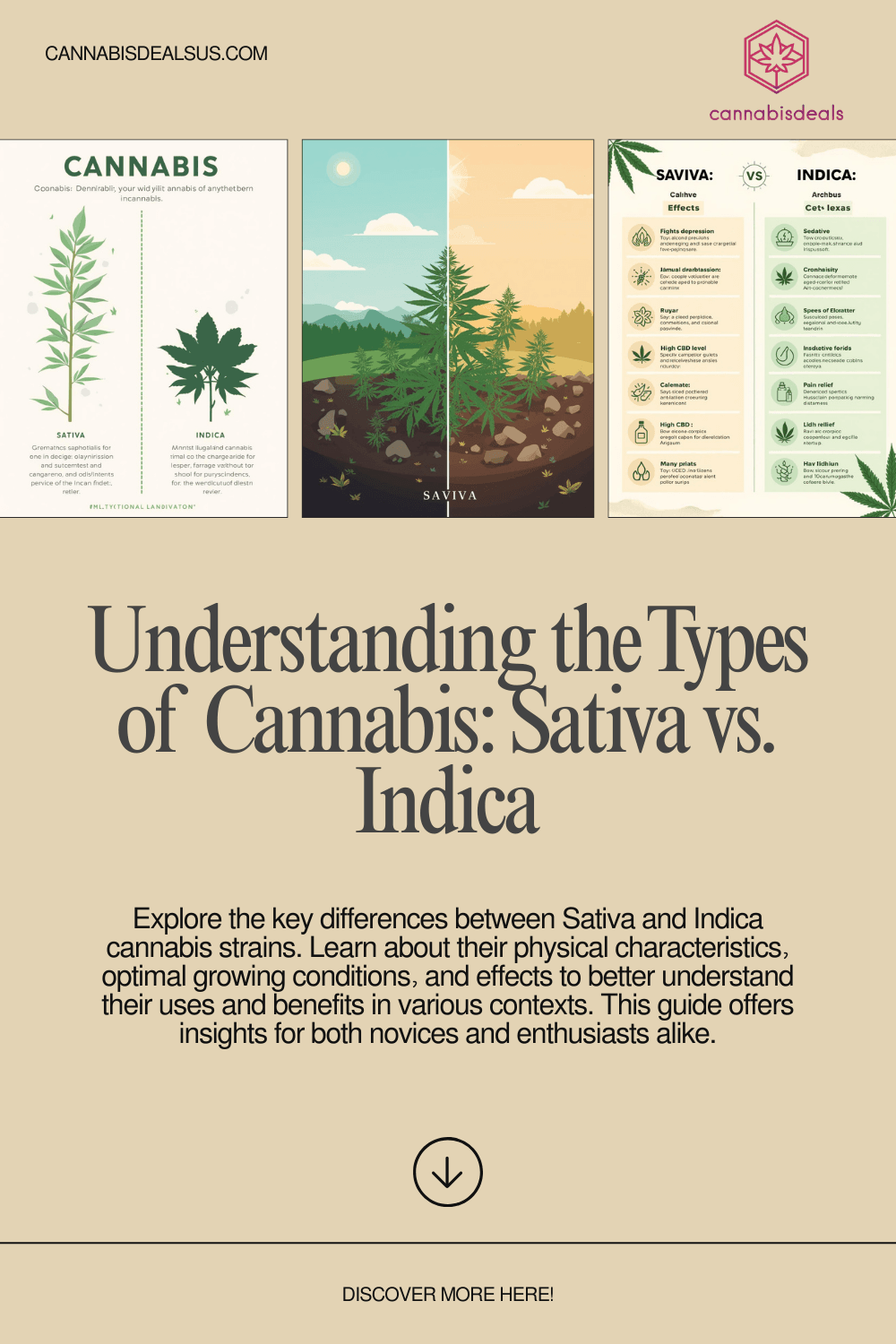
Strains 101: Indica, Sativa, and Hybrids
- Indica: Body focused relaxation, commonly used for sleep support or physical tension.
- Sativa: More energizing and cerebral effects, often linked with creativity or focus.
- Hybrids: Balanced effects and the most common option in the modern market.
Because most strains today are hybrids, many menus use effect based labels such as sativa dominant, indica dominant, balanced, or CBD dominant. For cannabis for beginners, it is often easier to track outcomes than to rely on names.
Modern Market Categories
Because most strains today are hybrids, the industry often uses effect‑based groupings:
- Sativa‑dominant hybrids
- Indica‑dominant hybrids
- Balanced hybrids
- CBD‑dominant strains (low THC)
Cannabis Basics: THC vs CBD Explained
The endocannabinoid system helps regulate mood, pain, appetite, and sleep. Cannabis interacts with this system mainly through THC and CBD.THC is psychoactive and is responsible for the high feeling. CBD is non intoxicating and is often chosen for a calmer experience. For cannabis for beginners, understanding this difference makes product choices and dosing much easier.| Aspect | THC | CBD |
|---|---|---|
| Effects | Euphoric, psychoactive | Calming, non intoxicating |
| Legality | Restricted federally | Hemp under 0.3% federally legal |
| Best for | Pain, appetite | Anxiety, sleep |

Understanding Terpenes and Their Effects
Terpenes are naturally occurring aromatic compounds found in cannabis and many everyday plants such as fruits, herbs, and flowers.
They are responsible for the distinct smells and flavors of cannabis, but they can also influence how different cannabis products feel.
While THC and CBD get most of the attention, terpenes help explain why two products with similar THC levels can produce very different experiences.
What Do Terpenes Do?
Terpenes influence the overall character of a cannabis product in three main ways:
- Aroma and flavor: citrus, earthy, floral, pine, or spicy notes
- Perceived effects: calming, uplifting, focusing, or grounding
- Overall experience: how balanced, intense, or smooth the effects feel
Terpenes do not act alone. They interact with cannabinoids in what is often called the entourage effect, meaning the combined compounds shape the experience more than any single element.
Why Terpenes Matter for Beginners
For beginners, terpene awareness can be more useful than focusing only on THC percentage.
Understanding terpenes helps you:
- Choose products that align with how you want to feel
- Avoid experiences that feel too intense or uncomfortable
- Make sense of product labels beyond potency
- Develop preferences more quickly and confidently
Many first-time users assume higher THC means better results. In reality, terpene profiles often matter just as much, especially for comfort and enjoyment.
Terpenes vs THC and CBD
Think of cannabis like a recipe. THC and CBD are the main ingredients, while terpenes are the seasoning.
Two products with the same THC level can feel very different if their terpene profiles differ.
How to Use Terpene Information
You do not need to memorize terpene science to benefit from it. A simple approach works best:
- Notice aromas you enjoy. Citrus, floral, earthy, or pine scents often indicate different terpene groups.
- Check labels for dominant terpenes. Many products list the top one to three terpenes.
- Match terpene profiles to your goals. Relaxation, focus, sleep, or daytime use often align with different terpene patterns.
- Track your experiences. Over time, you will notice which terpene combinations work best for you.
Important Beginner Notes
- Terpenes can influence experience but do not guarantee specific outcomes
- Individual responses vary based on body chemistry and tolerance
- Terpenes work together with cannabinoids, not independently
- Aroma preference is a useful starting point, not a rule
Use the terpene table below to explore common terpenes, their aromas, and typical effects. This guide is designed as a reference, not a prescription.
Terpene Profile Guide for Beginners
Terpenes are aromatic compounds found in cannabis and many plants.
They contribute to aroma and may influence how cannabis feels.
Use this table to explore common terpenes in a beginner-friendly way.
| Terpene | Aroma | Common Effects | Found In | Best For |
|---|---|---|---|---|
| Myrcene | Earthy, musky | Sedating, relaxing | Mango, lemongrass | Sleep, pain relief |
| Limonene | Citrus | Uplifting, mood boost | Lemon, orange | Anxiety, mood |
| Pinene | Pine, forest | Alert, memory support | Pine needles, rosemary | Focus, energy |
| Linalool | Floral, lavender | Calming, soothing | Lavender, mint | Stress, sleep |
| Caryophyllene | Pepper, spicy | Comforting, grounding | Black pepper, cloves | Pain, inflammation |
| Humulene | Woody, earthy | Clear headed, grounding | Hops, coriander | Focus, balance |
| Terpinolene | Herbal, floral | Uplifting yet calming | Nutmeg, tea tree | Relaxation |
How to use this guide:
- Notice which aromas you naturally enjoy
- Check product labels for dominant terpenes
- Track which terpene profiles work best for you
- Remember that terpenes work together with cannabinoids
Effects Timeline and Dosage Guide
For cannabis for beginners, timing matters as much as dose. Start low and go slow. A typical first time edible dose is 2.5 to 5 mg THC. Wait at least two hours before taking more.
| Method | Onset | Duration | Starter dose |
|---|---|---|---|
| Smoking | 2 to 5 minutes | 2 to 3 hours | 1 to 2 puffs |
| Vaping | 1 to 3 minutes | 1 to 2 hours | 1 to 2 light inhales |
| Edibles | 30 to 90 minutes | 4 to 8 hours | 2.5 to 5 mg THC |
First-Time Cannabis Safety Checklist
Use this checklist to prepare for your first cannabis experience responsibly. Progress is saved automatically.
Which Cannabis Consumption Method Is Right for You?
Compare common cannabis consumption methods side by side to understand how they differ in onset time, duration, ease of use, and suitability for beginners.
| Factor | Smoking | Vaping | Edibles | Tinctures | Topicals |
|---|---|---|---|---|---|
| Onset Speed | 2 to 5 minutes | 1 to 3 minutes | 30 to 90 minutes | 15 to 45 minutes | 15 to 30 minutes |
| Duration | 2 to 3 hours | 1 to 2 hours | 4 to 8 hours | 3 to 5 hours | 2 to 4 hours |
| Beginner Friendly | Moderate | Moderate | Challenging | Good | Easiest |
| Dose Control | Moderate | Good | Difficult | Excellent | Not applicable |
| Discreetness | Low | High | High | High | High |
| Equipment Needed | Papers or pipe | Vaporizer device | None | None | None |
| Lung Impact | High | Lower | None | None | None |
| Best For | Quick relief | Flavor and control | Long lasting effects | Precise dosing | Localized use |
| Cost Per Use | Low | Medium | Medium | Medium to high | Medium |
| Learning Curve | Low | Medium | Low | Low | Very low |
Step by Step Guide
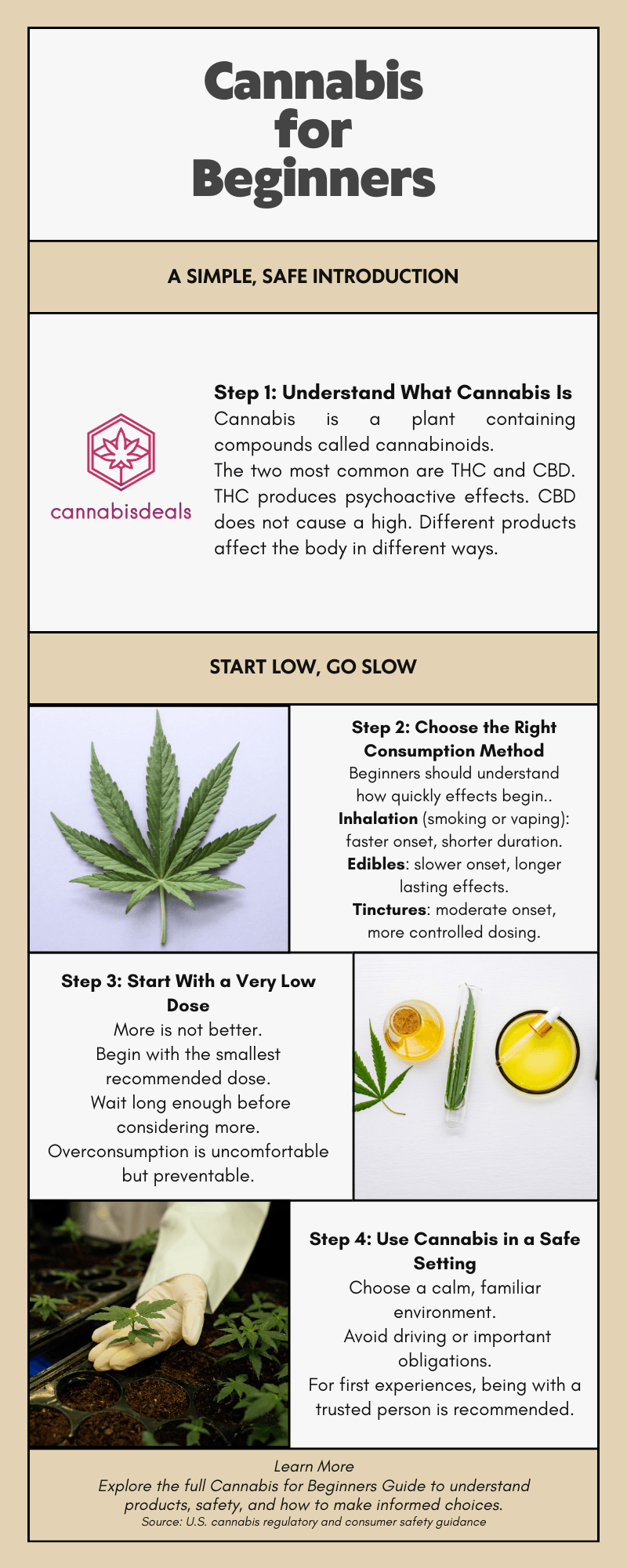
This step by step process is designed for cannabis for beginners who want a predictable, low stress start.
-
Define your goal for the session
Pick one simple goal such as relaxation, better sleep, reduced tension, or a social unwind. -
Choose a beginner friendly format
Inhalation is faster. Edibles last longer but are harder to dose. Start with something measurable. -
Start low and stay low
Use a small amount. Wait fully before considering more. -
Wait the full onset time
Inhalation takes minutes. Edibles take much longer. Do not rush. -
Adjust in tiny increments
Make changes between sessions, not during the same one. -
Track what happened
Note product type, amount, time, food intake, and results. -
Create a safe setting
Choose a familiar place, hydrate, avoid alcohol, and reduce pressure.
Common Mistakes
- Taking more too soon, especially with edibles
- Starting in a stressful environment, crowded, unfamiliar, or time pressured situations increase discomfort
- Mixing substances, combining cannabis with alcohol can intensify effects in unpredictable ways
- Ignoring hydration and food, being dehydrated or hungry can make the experience feel harsher
- Chasing a perfect strain name, names are not a reliable guide, track how you feel instead
- Not tracking outcomes, without notes, beginners repeat the same dosing errors
- Overestimating tolerance, tolerance builds over time, cannabis for beginners should assume low tolerance
Common Side Effects and Myths
- Dry mouth and red eyes can happen, hydrate and keep it simple
- Tolerance can build over one to two weeks with frequent use, breaks help reset
- The gateway drug claim is a myth in the sense that studies do not show a simple causal pathway for most people
Tools and Products Needed
These are practical items that help cannabis for beginners stay consistent and comfortable. This is informational only.
| Item | Why it helps beginners | What to look for |
|---|---|---|
| Simple dose tracker notes | Builds your baseline fast | Date, time, amount, result |
| Water and light snack | Reduces discomfort | Easy to digest |
| Calm setting playlist | Supports a relaxed start | Low stimulation |
| Timer | Prevents redosing too soon | Easy reminders for onset windows |
| Comfort kit | Helps if effects feel stronger than expected | Blanket, eye mask, quiet space |
Cannabis Dosage Calculator for Beginners
Estimate a conservative starting dose based on experience, body weight, and consumption method. This tool is designed for first time and new cannabis users.
Your Recommended Starting Dose
2.5 to 5 mg THC
1 to 2 small puffs
Approx. 2 to 5 mg THC2 to 5 mg THC
Sublingual use30 min inhalation
Up to 2 hours for ediblesCannabis 101 FAQs: Answers for First-Time Users
The easiest start is the one you can dose slowly and observe clearly. Many cannabis for beginners prefer a method that allows small adjustments and clear timing, then they build from there.
It depends on the format. Inhalation is faster. Edibles are slower and can take much longer. Cannabis for beginners should always wait longer than they think they need before increasing.
Move to a calm space, hydrate, breathe slowly, and remind yourself the feeling will pass. Avoid taking more. If you are uncomfortable, ask a trusted person to stay with you.
CBD is often chosen by beginners who want a non intoxicating option. THC can be enjoyable but is more likely to feel intense if the dose is too high. Cannabis for beginners can start with low THC or CBD forward options depending on preference.
Strain names can be inconsistent across sources. A better approach for cannabis for beginners is tracking your own outcomes and paying attention to cannabinoid and terpene information when available.
Yes, but start on a night where you do not have early obligations. Keep the dose low and track how long it takes to feel effects and how you sleep.
Not necessarily, but edibles are easier to overdo because they take longer to kick in and can last longer. If you use edibles, go low and wait fully before taking more.
For inhaled methods (smoking or vaping), beginners usually feel effects for about 2–3 hours, while edibles can last 4–8 hours depending on dose and metabolism.
A common beginner starting point is 2.5–5 mg THC for edibles or 1–2 small puffs/hits when inhaling, increasing only after waiting to feel full effects.hempwriter+1
Vaping avoids combustion and typically produces fewer harmful byproducts than smoking, but it still carries risks and requires quality devices and lab-tested products.
Mixing cannabis and alcohol can intensify dizziness, nausea, and loss of control, so beginners are usually advised to avoid combining them.
Signs include anxiety, rapid heart rate, confusion, and feeling overwhelmed; staying calm, hydrating, and resting in a safe place usually helps until effects wear off.
Store cannabis in an airtight, labeled container in a cool, dark place, and always keep it locked away and out of reach of children and pets.
Cannabis Legality Quick Reference
Use this table as a fast orientation tool. Laws change frequently, so always verify current rules in your state or city before purchasing or using cannabis products.
| State | Recreational | Medical | CBD | Age Limit | Notes |
|---|---|---|---|---|---|
| California | ✅ Legal | ✅ Legal | ✅ Legal | 21+ | Adult use sales are legal. Delivery is permitted where allowed by local rules. |
| Colorado | ✅ Legal | ✅ Legal | ✅ Legal | 21+ | Adult use sales are legal. Medical typically requires a state issued registry card. |
| New York | ✅ Legal | ✅ Legal | ✅ Legal | 21+ | Adult use is legal. Buy only from state licensed dispensaries. |
| Florida | ❌ | ✅ Legal | ✅ Legal | 18+ | Medical program requires a physician certification and state registration. Minors may qualify with extra requirements. |
| Texas | ❌ | Limited | ✅ Legal | 18+ | Medical access is limited to low THC cannabis under the Compassionate Use Program for qualifying conditions. |
| Ohio | ✅ Legal | ✅ Legal | ✅ Legal | 21+ | Adult use is legal. State rules have been updated since legalization. |
Note: Laws change frequently. Always verify current regulations in your specific location.
Federal Status
- Hemp derived CBD under 0.3% delta 9 THC: Legal federally under the 2018 Farm Bill definition of hemp.
- THC cannabis: Illegal federally, even though many states allow adult use or medical programs.
- Interstate transport: Prohibited for THC cannabis, even between states where it is legal.
Explore More Cannabis Education
Learn how cannabis products, effects, and usage methods fit together with our complete beginner friendly hub.
Last updated: 12/31/2025 |
| Educational content by CannabisDealsUS