

Picture this: You walk into a dispensary to purchase your favorite strain of cannabis, excited to get home and relax after a long day. But when it’s time to pay, the cashier informs you that they can only accept cash. Frustrated, you have to go find an ATM, pay a fee, and then return to the dispensary. This scenario may sound all too familiar for those in the cannabis industry, facing the challenges of limited payment options. But why is this the case? In this article, we will explore the high stakes of cannabis payment systems and how businesses can overcome these challenges to increase profit.
Introduction
The legal and financial landscape for the cannabis industry is rapidly evolving, and payment systems are a crucial component of success. As more countries and states legalize cannabis, businesses in the industry face a unique set of challenges when it comes to payment processing. While the demand for cannabis products continues to increase, the lack of efficient payment systems can hinder the growth and profitability of these businesses.
Importance of cannabis payment systems
The importance of cannabis payment systems cannot be underestimated. As the industry continues to grow and evolve, businesses must adapt to the changing financial landscape in order to remain competitive and profitable. In fact, having a reliable and efficient payment system is crucial for any business, but it becomes even more critical in the highly regulated cannabis industry.
First and foremost, cannabis businesses face unique challenges when it comes to payment processing due to legal limitations and regulations. The federal illegality of cannabis has created a complicated web of laws that vary from state to state, making it difficult for businesses to find consistent and established payment options. This poses significant risks for both businesses and consumers, as well as creating a barrier to entry in the industry.
Furthermore, the issue of legality also creates uncertainty and confusion for financial institutions. Banks are federally regulated and must adhere to strict guidelines, which makes them hesitant to work with cannabis companies. This not only limits the number of options available for businesses but also adds an extra layer of complexity when it comes to managing finances.
In addition, the lack of established payment methods for cannabis transactions presents a major challenge for businesses. The limited access to traditional payment options such as credit or debit cards means that many companies have had to resort to cash-only transactions. This not only poses safety concerns but also creates difficulties in tracking sales accurately. Furthermore, many consumers are used to the convenience of paying with cards and may be deterred from shopping at businesses that only accept cash.
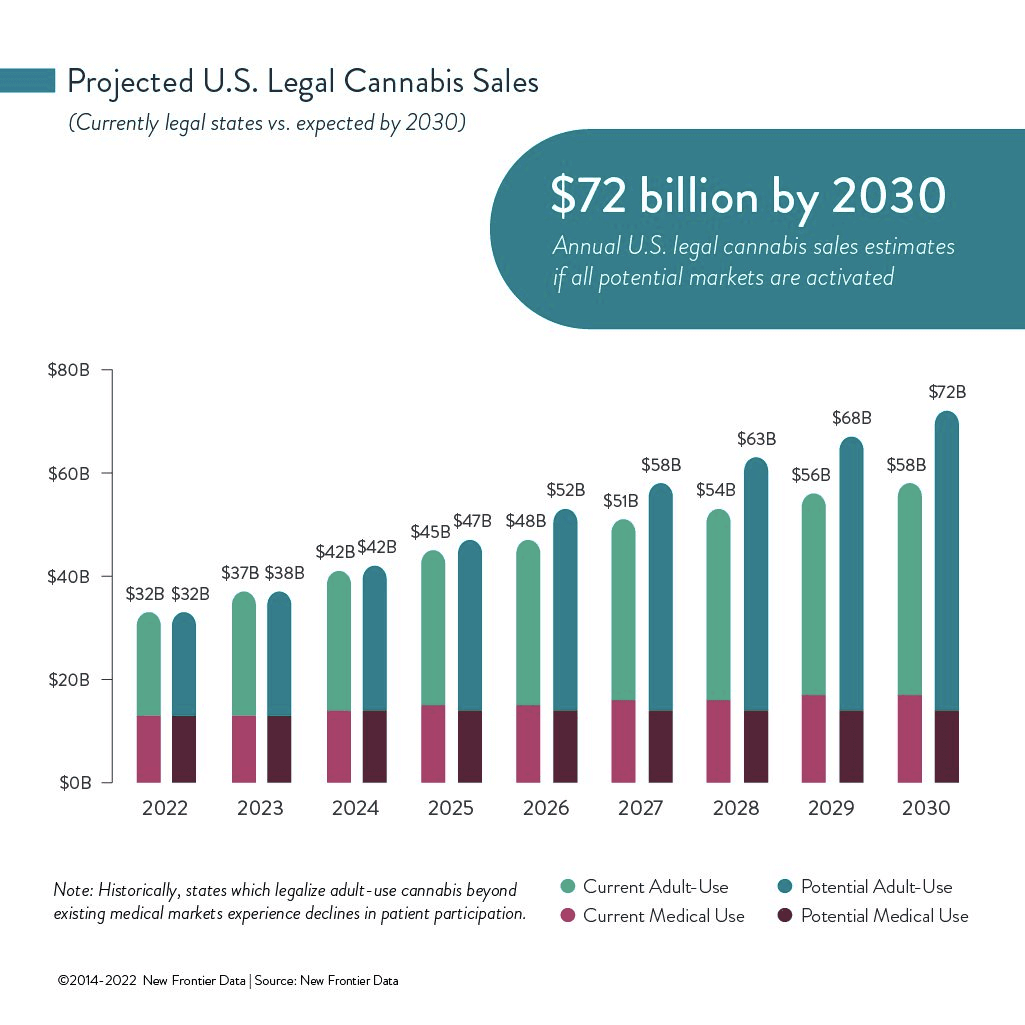
New State Markets Could Boost U.S. Legal Cannabis Sales to $72B by 2030 – New Frontier Data
These challenges ultimately have a significant impact on the profitability of cannabis businesses. With such a fast-growing market, projections of billions in sales are expected in the coming years. However, with limited payment options, a large portion of these sales are conducted in cash, leading to potential lost revenue for businesses. This is especially concerning given the high overhead costs that come with running a cannabis business.
However, all hope is not lost. Businesses can employ various strategies to overcome these challenges and establish a reliable payment system. One effective approach is through advocacy and lobbying efforts. By working together with industry associations and legislators, cannabis companies can push for legislation that would allow for easier access to financial services. This could also involve educating the public and policymakers on the benefits of establishing safe and regulated payment options for the cannabis industry.
Another strategy is to get creative with payment solutions. Some companies have found success in partnering with financial institutions that are willing to work with the cannabis industry. Others have turned to technology, such as mobile payment apps or cryptocurrencies, as alternative methods of payment. We will analyse these in detail in our article.
Current challenges in cannabis payment systems
The legalization of cannabis has opened up new opportunities for businesses operating in this industry. However, it has also brought about a range of financial challenges, particularly in terms of payment systems. The complex legal landscape surrounding cannabis can make it difficult for businesses to find suitable payment options.
One of the biggest challenges for cannabis businesses is navigating the various state and federal laws surrounding the industry. While many states have legalized medical or recreational use of cannabis, it is still illegal at the federal level. This conflicting legal status has led to a lack of clarity and consistency in regulations, making it challenging for businesses to find compliant ways to process payments.
Despite the increasing acceptance of cannabis, legal limitations and regulations still pose significant obstacles for payment processing. Each state has its own set of regulations and restrictions, creating a patchwork of rules that businesses must navigate. For example, some states require dispensaries to operate on a cash-only basis while others allow credit card transactions with limitations. This lack of uniformity makes it difficult for businesses to establish a secure and efficient payment system.
Furthermore, traditional banking and financial institutions have been cautious about working with cannabis businesses due to the conflicting laws and potential risk associated with handling money from a federally illegal substance. As a result, many banks are still hesitant to provide services to these businesses, making it difficult to establish reliable payment methods.
In addition to the legal barriers, there is also a lack of established payment methods in the cannabis industry. Due to the hesitancy of traditional financial institutions, alternative payment options have emerged such as cashless ATMs or online payment solutions. However, these options often come with high fees or complex processes, making them less than ideal for businesses and customers alike.
This lack of established payment methods can significantly impact the operations and profits of cannabis businesses. Cash transactions are often preferred due to their legality but can be time-consuming and risky for both customers and businesses. On the other hand, credit and debit card transactions offer convenience but are limited by restrictions from financial institutions. This can result in lost sales for businesses and inconvenience for customers who may prefer to use their cards.
The inability to process payments efficiently and securely not only affects the ease of transactions but also has a direct impact on the profits of cannabis businesses. A study by New Frontier Data estimates that the inability to access traditional banking and payment systems costs the cannabis industry $4 billion in lost tax revenue annually. This loss of revenue can significantly hinder the growth potential of businesses in this industry.
a. Legal limitations and regulations
The legal status of cannabis at the federal level poses a major challenge for businesses in the industry, impacting their ability to access traditional payment methods. Despite the increasing legalization of cannabis at the state level, it remains illegal at the federal level. This creates a conflict between state laws that allow for the sale of cannabis and federal laws that prohibit it. As a result, traditional payment processors such as credit card companies and banks are hesitant to work with cannabis businesses due to potential legal implications. This leaves cannabis companies with limited options for accepting payments from customers, as credit and debit cards are often not accepted.
Moreover, financial regulations and restrictions make it difficult for cannabis businesses to find banks or financial institutions willing to work with them, resulting in a primarily cash-based industry. The lack of access to banking services is one of the biggest hurdles faced by cannabis companies. Most banks are federally insured and therefore subject to strict regulations, making them wary of working with businesses involved in an industry that is still considered illegal by the federal government. This forces many cannabis companies to operate on a cash-only basis, making them vulnerable to security risks and adding extra expenses for cash handling and storage.
Legal Cannabis Market Projected To Rack Up $43 Billion By 2025 (forbes.com)
Furthermore, the lack of federal recognition for cannabis as a legitimate business creates legal uncertainties and hurdles for businesses in terms of payment processing. Due to the lack of federal legalization, cannabis businesses face numerous challenges in navigating the financial landscape. This includes potential legal risks, as well as difficulties with finding payment processors and banks that are willing to work with them. In addition, the constantly changing legal landscape adds complexity and confusion for businesses, making it challenging to establish stable and reliable payment systems.
The conflicting state and federal laws also create a challenging environment for cannabis businesses when it comes to payment processing. While some states have legalized cannabis for medical or recreational use, it is still prohibited at the federal level. This has resulted in various conflicting regulations and enforcement levels across different states, adding another layer of complexity for businesses trying to establish payment systems. This lack of uniformity and consistency further hinders the growth and stability of cannabis payment systems.
Furthermore, compliance with constantly changing regulations adds complexity and costs to cannabis payment systems, making it challenging for businesses to maintain profitability. With the legal status of cannabis still evolving, businesses must stay up to date with the latest laws and regulations to ensure compliance. This not only requires time and resources but also creates added expenses for businesses. For example, some states require strict tracking and reporting of all cannabis transactions, which can be costly for businesses.
b. Banking and financial barriers
The cannabis industry has faced numerous challenges when it comes to accessing traditional banking services. Despite the legalization of cannabis in several states, it is still considered a Schedule I drug at the federal level. This conflicting legal landscape has made financial institutions hesitant to work with the industry due to the risk of facing penalties or losing their FDIC insurance. As a result, most banks refuse to open accounts or provide loans for cannabis businesses, leaving them without crucial financial support.
The lack of traditional banking options for cannabis businesses is an important factor contributing to potential lost revenue. Without access to essential financial services such as loans, lines of credit, and merchant accounts, businesses may struggle to expand and grow. This can result in missed opportunities for increasing profits and expanding into new markets.
Banking on cannabis: the new network of lenders for a semi-legal industry (ft.com)
The lack of access to traditional banking services is a significant barrier for cannabis businesses. Operating on a cash-only basis not only poses security risks but also limits their potential for growth. With large amounts of cash on hand, dispensaries and cultivators become prime targets for robberies and burglaries. This puts employees’ safety at risk and can cause significant financial losses for the business.
Moreover, the cash-only nature of cannabis businesses presents challenges when it comes to managing finances and conducting transactions. Without proper banking support, businesses face difficulties in tracking expenses and revenues accurately. It also makes it challenging for them to pay taxes or obtain loans for expansion. These limitations hinder the growth and profitability of businesses in the cannabis industry.
To address these challenges, alternative financial solutions have emerged. Some credit unions have started providing banking services to cannabis businesses, taking advantage of a loophole in federal regulations. These credit unions are willing to work with the industry as they are not under the same pressure from federal regulators as traditional banks. While this is a positive development, these credit unions may not have the capacity to meet the demand from all cannabis businesses.
Another option that has gained popularity is online payment platforms specifically designed for the cannabis industry. These platforms offer digital payment options that can streamline transactions and reduce the risks associated with handling large amounts of cash. They also provide an audit trail, making it easier for businesses to track their finances and comply with tax requirements.
However, these alternative solutions come with their own set of challenges. Credit unions may have limited capacity, and online payment platforms may charge higher fees than traditional banking services. Additionally, the constantly evolving legal landscape around cannabis makes it difficult for these institutions to establish reliable and long-term partnerships with businesses in the industry.
As the cannabis industry continues to grow and evolve, it is crucial for businesses to have access to reliable and stable banking services. This not only ensures their safety but also allows them to operate more efficiently and maximize their profits. The federal government must take steps to remove barriers and provide clarity on financial regulations for the cannabis industry.
SAFER Banking Act: Marijuana May Soon Become a Bigger Deal (americanbar.org)
The SAFER Banking Act, recently passed by the Senate Banking Committee, represents a significant shift in the financial landscape for the cannabis industry. This bipartisan legislation aims to provide a “safe harbor” for banks and financial institutions, allowing them to serve state-sanctioned marijuana businesses without fear of federal prosecution. The Act addresses the longstanding tension between federal restrictions and state-level legalization, potentially enabling a more robust and secure financial infrastructure for cannabis-related businesses. It also includes provisions for insurers and mortgage loans, suggesting a broader acceptance and integration of the cannabis industry into the mainstream financial system. With 38 states and Washington, D.C. allowing medical use and several states regulating recreational use, the SAFER Banking Act could herald a new era of growth and legitimacy for the cannabis market.
Navigating Cannabis Payment Solutions: A Guide for Retail Operators (thecannabisindustry.org)
c. Lack of established payment methods
The lack of established payment methods is one of the biggest challenges facing the cannabis industry today. Despite the growing legalization of cannabis in various states, many traditional financial institutions still refuse to work with marijuana-related businesses. This leaves these companies with limited options when it comes to processing payments, which can significantly impact their profits. However, this is not an issue that has emerged overnight. With the increasing legalization and acceptance of cannabis, there have been efforts made to establish a reliable and secure payment system for the industry. Yet, due to the complex legal landscape and evolving nature of the business, it remains a major obstacle for both businesses and consumers alike.
Unlike other sectors where there are established financial systems and regulations in place, the cannabis industry is relatively new and constantly evolving. This means that there are no standardized payment methods for businesses to utilize, making it challenging to find a suitable and reliable solution.
The lack of established payment methods also means that many cannabis businesses are forced to operate on a cash-only basis. This poses significant risks for both customers and retailers. For customers, carrying large amounts of cash can make them targets for theft or robbery. On the other hand, retailers are faced with the challenge of securely storing and transporting large amounts of cash, increasing their vulnerability to potential criminal activity. This not only puts individuals at risk but also affects the overall safety and security of the community.
Impact on profits
The growth of the cannabis industry has been undeniable in recent years, with more and more states legalizing recreational and medicinal use. However, with this growth comes a complex and ever-changing financial landscape, posing challenges for businesses in the industry. One of the most significant challenges faced by cannabis businesses is the lack of established and reliable payment systems.
The primary reason for this challenge is the legal limitations and regulations surrounding cannabis. Despite its legalization in many states, cannabis is still considered illegal at the federal level. This creates a disconnect between state and federal laws, making it difficult for businesses to access traditional banking services. As a result, many cannabis businesses are forced to operate on a cash-only basis, which can pose significant risks and limitations.
The use of cash transactions not only makes it difficult to track sales and inventory but also increases the risk of theft and fraud. In fact, according to a report by Marijuana Business Daily, cannabis companies are 60% more likely to experience theft than other sectors due to their cash-intensive nature. This not only impacts profits through potential lost revenue but also adds additional costs for implementing security measures.
Furthermore, the lack of established payment methods also means that customers have limited options when purchasing cannabis products. This can lead to lost sales as customers may opt for alternative products that can be purchased with credit or debit cards. According to a survey by GreenWave Advisors, 70% of marijuana users prefer to pay for their purchases using credit or debit cards rather than cash.
In today’s fast-paced society, consumers expect convenience and flexibility when it comes to purchasing goods and services. With limited payment options, some customers may choose to take their business elsewhere rather than dealing with the inconvenience of carrying cash or using an unfamiliar payment method.
These limitations have a considerable impact on the profits of cannabis businesses. A case study by a leading cannabis retailer in Colorado found that over 65% of their sales were made with cash due to restrictions on payment options. As a result, they estimated that they were losing out on approximately $5 million in potential revenue each year.
To overcome these challenges and increase profits, businesses need to find creative solutions and partnerships with financial institutions. One strategy that has been gaining traction is advocacy and lobbying efforts. Marijuana Lobbying Profile • OpenSecrets. By working with policymakers and regulators, the cannabis industry can push for changes in laws and regulations to make it easier to access traditional banking services.
Additionally, some companies have found success in implementing creative payment solutions such as using prepaid cards or virtual wallets that can be loaded with funds for purchasing cannabis products. These options help bridge the gap between cash-only transactions and traditional forms of payment. However, they come with added costs and may not be available in all states.
Case studies and statistics
The cannabis industry has been experiencing rapid growth in recent years, with the legal market estimated to reach $73.6 billion by 2027. However, this growth has not come without challenges, particularly when it comes to payment systems. With the federal government still classifying cannabis as a Schedule I drug, businesses in the industry face several legal limitations and regulations that make it difficult to access traditional banking services. This has resulted in a reliance on cash transactions, which poses a major barrier for businesses looking to increase profits.
According to a report by BDS Analytics and Arcview Market Research, nearly 80% of cannabis sales in the US are conducted through cash transactions. This is due to the fact that federally regulated banks are hesitant to work with cannabis companies due to legal implications. As a result, many businesses are forced to handle large amounts of cash, which can be time-consuming and costly. Additionally, it also puts them at risk for theft and security breaches.
The lack of established payment methods in the cannabis industry also poses a challenge for businesses looking to maximize profits. Traditional payment options such as credit and debit cards are not widely accepted, leaving customers with limited options for making purchases. As a result, this can lead to lost revenue for businesses as customers may choose not to make a purchase if they do not have enough cash on hand.
A case study conducted by Green Bits, a cannabis retail software company, found that dispensaries that accept only cash see an average of $25 per transaction, while those that accept digital payments see an average of $50 per transaction. This significant difference in average transaction amount can have a major impact on a business’s bottom line.
Moreover, statistics from industry experts show that cannabis businesses lose up to 10% of their annual revenue due to payment processing hurdles (4). This not only affects their profitability but also hinders their ability to expand and invest in their operations.
Despite these challenges, there are strategies and solutions that can help cannabis businesses overcome obstacles in payment processing and boost profits. One approach is through advocacy efforts. Industry associations such as the National Cannabis Industry Association (NCIA) have been working towards changing federal laws and regulations to make it easier for cannabis companies to access banking services.
Another option is to explore creative payment solutions. Some businesses have turned to alternative payment methods such as mobile apps, virtual wallets, and electronic gift cards to offer their customers more options for making purchases. These solutions not only provide convenience for customers but also increase the security of the transaction.
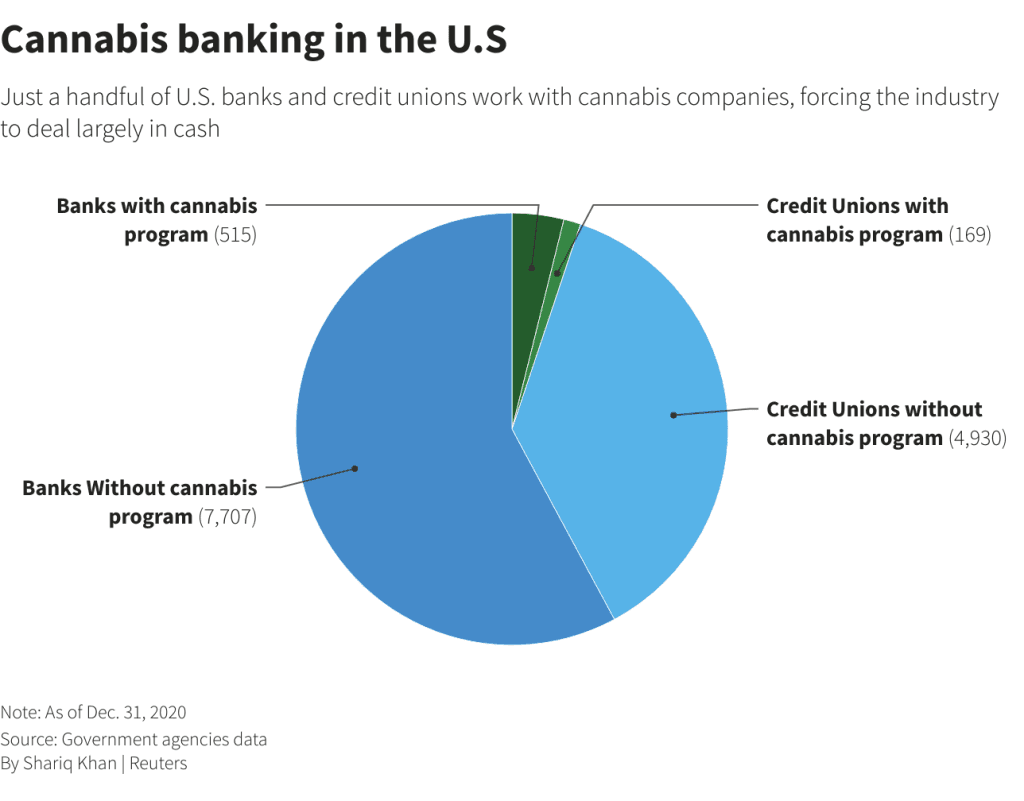
The lack of traditional banking options for cannabis businesses is a major factor contributing to potential lost revenue. Without access to essential financial services such as loans, lines of credit, and merchant accounts, businesses may struggle to expand and grow. This can result in missed opportunities for increasing profits and expanding into new markets.
Legal restrictions also play a significant role in potential lost revenue for cannabis businesses. Many states have implemented strict regulations on payment processing in the cannabis industry. For example, some require all transactions to be conducted using cash only while others have limits on the amount of money that can be deposited into bank accounts from cannabis-related activities. These restrictions not only make it difficult for businesses to operate efficiently but also limit their potential for growth and expansion.
In addition, the stigma surrounding the cannabis industry has resulted in limited financial opportunities for businesses. Many banks and financial institutions are hesitant to work with cannabis businesses due to concerns about reputation and risk. This further limits the options available for payment processing and ultimately leads to potential lost revenue for businesses.
To overcome these challenges and reduce potential lost revenue, cannabis businesses must be proactive in finding solutions. One strategy is to advocate for change and lobby for more inclusive banking and financial regulations for the industry. This can involve working with government officials, industry associations, and other stakeholders to bring about policy changes that will bring much needed change in the industry.
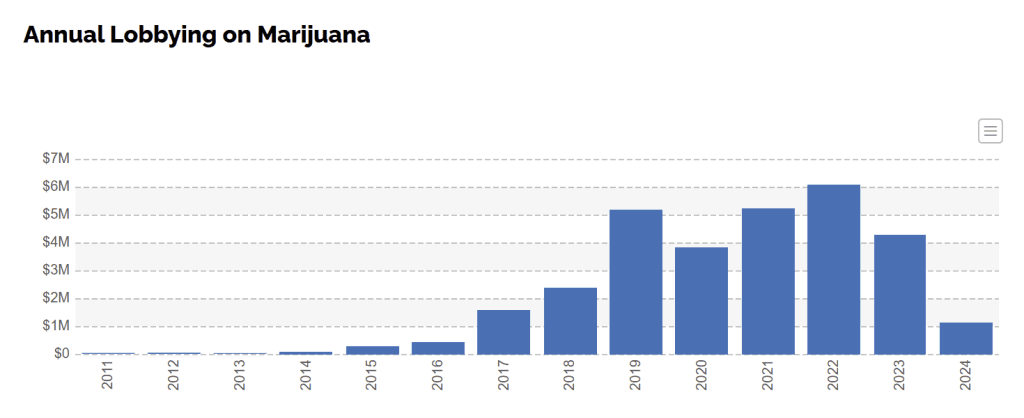
NOTE: Figures on this graph are calculations by OpenSecrets based on data from the Senate Office of Public Records. Data for the most recent year was downloaded on April 24, 2024 and includes spending from January 1 – March 31. Prior years include spending from January through December.
Strategies for overcoming challenges
The cannabis industry has faced numerous challenges when it comes to payment processing. These include legal limitations and regulations, banking and financial barriers, and a lack of established payment methods. However, in order to increase profits and establish a stable financial system, businesses in the industry must explore various strategies to overcome these obstacles.
In order to successfully navigate these challenges and establish a stable financial system, advocacy and lobbying efforts are essential. By working together, the industry can push for changes in laws and regulations that will allow for easier access to banking services and payment processing options. This has been seen in countries like Canada and Uruguay where cannabis is legal, and financial institutions have been able to provide services to the industry.
Looking at successful examples of cannabis payment systems can also provide valuable insights for businesses. Currently, there are a few existing payment systems specifically tailored for the cannabis industry, such as Hypur, PayQwick, and CanPay. These systems have their own unique features and limitations, but by analyzing them, we can paint the actual picture of the sector.
a. Advocacy and lobbying efforts
The cannabis industry has faced numerous challenges with payment processing due to legal restrictions, making it difficult for businesses to operate efficiently and maximize profits. However, in recent years, there has been a growing movement towards change through advocacy and lobbying efforts. Many organizations and businesses within the cannabis industry have come together to form advocacy groups that work towards more lenient regulations surrounding payment processing.
These groups have gained momentum as more states legalize cannabis and the economic benefits of the industry become increasingly evident. By joining forces and advocating for change, the cannabis industry is hoping to overcome barriers related to payment processing and create a more stable financial landscape. This will not only benefit businesses but also consumers who are often inconvenienced by the limited payment options available.
One of the primary goals of these advocacy groups is to push for federal legalization of cannabis, which would remove one of the biggest hurdles in payment processing – the discrepancy between state and federal laws. Currently, even in states where cannabis is legal, it is still considered a Schedule I drug by the federal government, making banks hesitant to provide services to cannabis businesses due to potential legal repercussions. Therefore, lobbying efforts at the federal level are crucial in creating a unified approach towards cannabis regulation and payment processing.
Moreover, these organizations are also working towards educating lawmakers and policymakers about the economic benefits of the cannabis industry. With more states legalizing recreational or medical cannabis, there is a substantial increase in tax revenue and job opportunities. By highlighting these positive impacts, advocacy groups hope to gain support from legislators in implementing more favorable payment processing regulations.
The formation of these advocacy groups has also allowed for collaboration and strategizing on how to effectively address the challenges faced by the industry. Through regular meetings, conferences, and workshops, members can share their experiences and brainstorm solutions for common issues related to payment systems. This collective effort has resulted in a stronger voice for the cannabis industry and increased awareness among decision-makers.
SAFE Banking Act Reintroduced in House and Senate – NORML
While there is still a long way to go, the impact of advocacy and lobbying efforts on cannabis payment systems cannot be ignored. The growing support for legalization and the economic benefits of the industry have created a more receptive environment for change. However, it is essential to continue these efforts and push for meaningful reform in payment processing regulations.
In conclusion, advocacy and lobbying efforts are crucial in overcoming the challenges faced by cannabis payment systems. By working together and advocating for federal legalization, educating policymakers, and collaborating on solutions, the industry can pave the way for a more stable financial landscape and increase profits.
b. Creative payment solutions
In the constantly evolving landscape of cannabis payments, businesses have been forced to think outside the box when it comes to finding solutions for their financial transactions. One of the most popular and creative payment solutions that have emerged is the use of cannabis-specific payment apps and pre-paid card systems. These options offer convenience, security, and a way to bypass traditional financial institutions. However, they also come with their own set of limitations and drawbacks that must be carefully considered before implementation.
One major limitation of these alternative payment methods is their reliance on technology. Cannabis payment apps and pre-paid cards often require a smartphone or a card reader device in order to function, making them inaccessible for some customers who may not have access to these devices. This can limit the customer base for businesses using these payment solutions, potentially resulting in lost revenue. Additionally, these technologies are still relatively new and untested in the market, raising concerns about reliability and security.
Another potential solution that has gained attention is the use of blockchain technology for cannabis payments. Blockchain is a decentralized digital ledger that stores records of transactions across a network of computers. It offers a way to securely record and track cannabis transactions without involving traditional banks or financial institutions. While this may seem like a promising solution, it faces regulatory hurdles as cannabis is still largely illegal at the federal level. This could result in legal challenges and hinder the widespread adoption of this technology in the industry.
Businesses have also looked towards leveraging existing payment platforms and adapting them for cannabis transactions. This includes integrating with virtual terminals or online payment gateways which allow customers to make purchases through their credit or debit cards. The advantage of this option is that it allows for a wider customer base and offers convenience for both the businesses and customers. However, this approach also comes with its own challenges as many banks are hesitant to work with cannabis-related businesses due to federal regulations.
In some cases, businesses have even turned to barter systems or accepting other forms of commodities as payment. This bypasses the need for traditional payment methods, but it also limits the options for customers and can be a more complicated process to manage for businesses. While these solutions may work for some businesses, they may not be sustainable in the long run.
Despite the challenges, there have been successful examples of businesses implementing creative payment solutions in the cannabis industry. One such example is California-based dispensary Harborside, which has developed its own cashless payment system through a partnership with Hypur.
c. Partnerships with financial institutions
Collaborating with traditional financial institutions can offer safe and reliable payment solutions for cannabis businesses. As the industry continues to grow and gain legitimacy, more financial institutions are becoming open to working with cannabis companies. This partnership presents a win-win situation for both parties involved. For cannabis businesses, it provides access to established systems and services that can handle transactions efficiently and effectively. On the other hand, financial institutions can tap into a lucrative market that has been previously untapped due to legal restrictions.
Moreover, partnering with financial institutions provides credibility and legitimacy to the cannabis industry. Despite the legalization of cannabis in several states, there is still a stigma surrounding the business. Many traditional financial institutions may be hesitant to work with cannabis companies due to this stigma and the fear of potential legal repercussions. By forming partnerships, cannabis businesses can demonstrate their compliance with regulations and willingness to operate within the law. This can help alleviate concerns and build trust with financial institutions.
Financial institutions bring expertise in managing transactions and mitigating risk, making them valuable partners for cannabis businesses. With their established systems and protocols in place, they can provide secure payment options for customers while also ensuring compliance with state laws. Additionally, they have experience in dealing with high-risk industries and managing fraudulent activities, which are common concerns in the cannabis industry. By leveraging their expertise, cannabis businesses can minimize risks and increase consumer confidence in their payment methods.
One major issue faced by many cannabis businesses is the cash-only nature of transactions. This creates numerous challenges such as increased security risks, difficulty in managing large amounts of cash, and limited opportunities for expansion. Establishing partnerships with banks or credit unions can help address these issues. By having access to traditional banking services, cannabis businesses no longer have to rely solely on cash transactions. This not only improves safety but also opens up new opportunities for growth.
Forming strategic alliances with financial institutions can also lead to the development of innovative payment solutions specifically tailored for the cannabis industry. As traditional payment methods such as credit and debit cards are not widely accepted due to federal restrictions, there is a need for alternative options. Working with financial institutions can help bridge this gap and provide convenient and safe payment methods for customers. For instance, some banks have started offering online payment solutions that allow customers to make purchases using their checking account, bypassing the need for a credit or debit card.
Benefits and drawbacks of payment options
The cannabis industry operates in a unique financial landscape, making payment options a critical aspect of business operations. While cash transactions have been the most widely used method due to the legal limitations and banking barriers faced by the industry, there are also other options available such as credit and debit cards and cryptocurrency. However, each of these payment methods comes with its own set of benefits and drawbacks that need to be carefully considered.
Cash transactions may seem like a convenient option for cannabis businesses, especially since it is still a largely cash-based industry. Dispensaries and other businesses can easily handle large sums of cash without relying on banks or financial institutions. However, this also poses significant safety and security risks. Large amounts of cash on hand can make businesses vulnerable to theft and robbery. In addition, having to deal with large amounts of cash can also be time-consuming and labor-intensive, requiring additional resources for proper handling and management.
On the other hand, credit and debit cards offer greater convenience and security for customers compared to cash transactions. They are also more widely accepted in many industries, making them a preferred choice for many consumers. However, their use in the cannabis industry is limited due to federal regulations that classify cannabis as a Schedule I drug. This has resulted in major credit card companies like Visa and Mastercard prohibiting the use of their cards for cannabis-related purchases. As a result, dispensaries and other businesses in the industry have had to rely on alternative payment solutions or continue operating primarily with cash transactions.
Cryptocurrency has emerged as a potential solution for cannabis payment systems in recent years. Its decentralized nature allows for faster and more secure transactions, without being subject to federal regulations. Some dispensaries have begun accepting cryptocurrencies like Bitcoin as a form of payment, providing customers with a more convenient option while also reducing risks associated with holding large amounts of cash. However, there are still challenges to be overcome with using cryptocurrency in the cannabis industry, such as volatility in value and the need for businesses to have the technical capability and expertise to handle digital currency.
Understanding the benefits and drawbacks of each payment option is crucial for making informed decisions in the cannabis industry. While cash transactions may be the most widely used method, they come with significant drawbacks such as safety and security risks. Credit and debit card payments offer more convenience and security, but their use in the industry is limited due to regulations. Cryptocurrency has emerged as a potential solution, but it also has its own set of challenges. Businesses must carefully consider these factors when deciding on which payment options to offer to
a. Cash transactions
Cash transactions remain the primary form of payment for cannabis businesses due to legal and financial limitations. Despite the growing acceptance and legalization of cannabis, it is still classified as a Schedule 1 drug by the federal government, making it illegal at a national level. This has resulted in many banks and financial institutions being hesitant to work with cannabis businesses, fearing repercussions from federal agencies. As a result, most cannabis businesses are forced to operate on a cash-only basis.
However, using cash for all transactions comes with significant risks and limitations. One of the biggest concerns for cash transactions in the cannabis industry is security. With large amounts of cash stored on-site, these businesses become targets for theft and robberies, posing a significant safety risk for employees and customers alike. The lack of electronic payments also means that businesses have to manually count and store their cash, which can be time-consuming and prone to human error.
Moreover, relying solely on cash transactions can lead to a lack of transparency in financial records. Without a paper trail or digital records, it becomes challenging for businesses to track their finances accurately. This can hinder their ability to make informed decisions about budgeting, inventory management, and other crucial aspects of their operations. In addition, cash-only payments make it difficult for businesses to comply with tax regulations and pay their dues promptly.
The absence of electronic payment options also poses challenges for online sales and delivery services in the cannabis industry. With the rise of e-commerce platforms, consumers have come to expect digital payment methods for convenience and efficiency. However, without access to credit or debit card transactions, cannabis businesses struggle to tap into this market. This limits their potential for growth and expansion, especially in states where delivery services are legally allowed.
Furthermore, cash transactions limit the ability of cannabis businesses to offer discounts and loyalty programs to customers. This is because they cannot track purchases or keep customer information securely stored without electronic payment methods. As a result, businesses miss out on opportunities to build a loyal customer base and increase revenue through repeat sales and referrals.
In conclusion, while cash transactions may be the only current option for many cannabis businesses, it comes with significant risks and limitations. The absence of electronic payments not only poses safety concerns but also hinders business operations and growth potential. Therefore, it is crucial for cannabis businesses to explore alternative payment options to mitigate these challenges and increase profitability. In the next section, we will discuss the potential benefits and drawbacks of other payment methods such as credit and debit cards and cryptocurrency.
b. Credit and debit cards
Despite being the preferred payment method for many customers, credit and debit cards are often not accepted in the cannabis industry. This is due to the strict regulations and legal gray area surrounding cannabis, which has resulted in many banks and card processors refusing to do business with cannabis companies. As a result, cannabis businesses face numerous challenges when it comes to processing credit and debit card payments.
The federal government still considers marijuana a Schedule I drug, which means that it is illegal on a national level. This can make banks and card processors hesitant to work with cannabis companies, as they fear potential legal repercussions. Even in states where cannabis is legalized, there are often conflicting laws and regulations that make it difficult for financial institutions to navigate the industry. This has led to a lack of established guidelines and protocols for handling cannabis transactions.
This lack of credit and debit card acceptance can lead to lost sales and reduced customer satisfaction. With the rise of online shopping and cashless transactions, many customers expect the convenience of paying with their cards. However, without this option available, customers may choose to take their business elsewhere. Additionally, cash-only transactions can be inconvenient for both customers and businesses, leading to longer wait times and increased risk of human error.
Some states have implemented solutions such as limited access to credit card processing for cannabis businesses, but these options come with high fees and restrictions. For example, in California, where recreational marijuana is legal, only a handful of banks offer limited services to cannabis businesses at exorbitant fees. This creates an additional burden for businesses already struggling with high taxes and expensive operational costs.
Moreover, the use of cash-only transactions in the cannabis industry also poses safety concerns for both businesses and customers. The large amounts of cash on hand make dispensaries a target for theft and robbery. In fact, the National Cannabis Industry Association reports that 70% of cannabis retailers have experienced theft or burglary. This not only puts employees at risk but also customers who may be caught in the middle of a robbery.
However, the recent increase in legalization has prompted some financial institutions and payment processors to explore the option of working with cannabis businesses. As more states legalize marijuana for medical or recreational use, the potential market for cannabis payment systems is expanding. This has led to some financial institutions and payment processors to reconsider their stance on working with the industry.
In states like Oregon and Washington, where cannabis has been legal for several years, some credit unions have started offering services to cannabis businesses. These state-chartered credit unions operate independently from federal regulations.
c. Cryptocurrency
Cryptocurrency, a digital or virtual form of currency, has emerged as a potential solution to the challenges of banking barriers in the cannabis industry. This innovative payment method is decentralized, meaning it is not controlled by any central authority such as a bank or government. The use of cryptocurrency can help businesses overcome the risks and limitations of current payment systems, offering a secure and traceable alternative to traditional methods.
Despite its potential benefits, there are also drawbacks to using cryptocurrency as a payment option for cannabis. One major concern is its volatility, as the value of cryptocurrency can fluctuate significantly in a short period of time. This can make it difficult for businesses to accurately price their products or services and can lead to financial losses if the value suddenly drops. Additionally, the legality of cryptocurrency in relation to cannabis laws is still unclear in many states and countries, adding another layer of risk for businesses.
However, many cannabis businesses have already successfully implemented cryptocurrency as a payment option, showcasing its potential in the industry. One example is the California-based retailer MedMen, which became one of the first dispensaries to accept bitcoin as a form of payment in 2018. This move not only allowed them to cater to customers who prefer using cryptocurrency but also helped them navigate through the challenges of traditional banking and financial barriers.

Understanding the basics of cryptocurrency and its integration into the cannabis market is crucial for businesses looking to adopt this payment system. To start accepting cryptocurrency payments, businesses need to set up a digital wallet that allows them to store and exchange various forms of cryptocurrency. They also need to educate themselves on the different types of cryptocurrency available, such as Bitcoin, Ethereum, and Litecoin, and choose which ones they want to accept.
One major advantage of using cryptocurrency for cannabis transactions is its ability to provide a secure and traceable alternative to cash transactions. Cash has been the primary mode of payment in the industry due to limited access to banking services, but it comes with its own set of risks. The use of cryptocurrency eliminates the need for handling large amounts of cash, reducing the risk of theft and improving safety for both customers and businesses.
Popular marijuana-based cryptocurrencies include Tokes, PotCoin, CannabisCoin, DopeCoin, and HempCoin which allow merchants and consumers to complete transactions and avoid the banking system.
Successful examples of cannabis payment systems
Despite the challenges, there are already successful examples of cannabis payment systems in the industry. These existing payment systems offer valuable insights and lessons for businesses navigating the complex financial landscape. Let’s examine some of the best practices and strategies adopted by these successful cannabis payment systems.
One of the key factors behind their success is their ability to adapt and evolve amidst changing regulations and limitations. One of the major challenges for cannabis payment systems is the ever-changing legal landscape. This includes federal restrictions, varying state regulations, and constantly evolving laws. However, successful payment systems have managed to stay ahead by constantly adapting to these changes.
For instance, many companies have formed partnerships with financial institutions that are willing to work with cannabis businesses, despite federal restrictions. By partnering with banks and credit unions that are open to working with the industry, these payment systems have been able to offer more options for payment processing and reduce their reliance on cash transactions. This not only increases convenience for customers but also helps businesses avoid potential security risks associated with large amounts of cash on hand.
Another strategy that has contributed to the success of cannabis payment systems is their active participation in advocacy and lobbying efforts. These efforts aim to push for more friendly regulations for the industry and address issues related to banking and payments. By advocating for change at a higher level, these payment systems not only benefit themselves but also pave the way for other businesses in the industry.
Moreover, successful payment systems have also implemented innovative solutions to overcome challenges. For example, some companies have developed loyalty programs and rewards programs through their payment systems. This encourages customer retention and satisfaction while also providing an additional incentive for customers to choose their platform for purchases.
It is crucial for businesses to analyze and learn from these examples in order to maximize profits and overcome obstacles in the payment process. By studying successful payment systems, businesses can gain a better understanding of what works and what doesn’t in this industry. This can help them make more informed decisions when developing their own payment systems.
Lessons learned and best practices
One of the key lessons learned from existing cannabis payment systems is the importance of adaptability. As regulations and laws surrounding cannabis continue to change, businesses must be able to quickly pivot and adjust their payment processes accordingly. This may involve working closely with financial institutions, advocacy and lobbying efforts, or implementing creative payment solutions. By being open to new ideas and strategies, businesses can better navigate the challenges in the financial landscape.
Another crucial lesson is the need for efficiency and innovation in payment processing. As the demand for legal cannabis increases, so does the volume of transactions. The traditional cash-only model of the industry is becoming increasingly outdated and inefficient. Businesses should look to successful examples such as CannaPay, a streamlined payment platform specifically designed for cannabis businesses. By incorporating similar systems, businesses can save time and resources, ultimately leading to increased profits.
Dutchie marijuana retail customers report system crashes on 4/20
In addition to efficiency, mitigating risks is also important for successful payment systems in the cannabis industry. By learning from past mistakes and understanding potential vulnerabilities, businesses can implement measures that protect both themselves and their customers. For example, utilizing secure online payment options can reduce the risk of theft or fraud associated with carrying large sums of cash.
Furthermore, building strong partnerships with financial institutions is essential for improving payment solutions in the cannabis industry. With more banks and credit unions beginning to offer services to cannabis businesses, it is crucial for companies to establish relationships with trusted financial partners. These partnerships can provide access to traditional banking services such as loans and lines of credit, as well as secure and efficient payment processing.
Conclusion and recommendations for businesses
As the cannabis industry continues to grow and evolve, it is essential for businesses to adapt to the changing financial landscape. Payment systems play a crucial role in the success of any business, and this is especially true for those in the cannabis industry. After discussing the challenges and potential solutions for cannabis payment systems, it is clear that businesses must be proactive in finding and implementing strategies to overcome obstacles and increase their profits.
One of the most important recommendations for businesses is to stay informed about evolving regulations and trends in the cannabis industry. Due to the legal limitations and regulations surrounding cannabis, payment systems can be complex and constantly changing. Businesses must be aware of these changes and adapt accordingly in order to avoid any legal issues or delays in transactions. This may require investing time and resources into staying updated on regulations, but it is crucial for long-term success.
Another key recommendation is for businesses to diversify their payment options. Currently, cash transactions are the most common form of payment in the cannabis industry due to the lack of established payment methods. However, relying solely on cash transactions can limit a business’s customer base and lead to potential lost revenue. By offering alternative payment options such as credit or debit cards or even cryptocurrency, businesses can attract a wider range of customers and increase their profits.
Furthermore, businesses should consider building partnerships with financial institutions that are open to working with the cannabis industry. This can provide a more secure and efficient payment system while also establishing legitimacy for the business. It may take some effort to find a supportive financial institution, but the benefits can far outweigh the initial challenges.
It is also important for businesses to carefully consider the benefits and drawbacks of different payment options. Cash transactions may seem like the simplest option, but they come with risks such as theft and difficulty keeping track of finances. Credit and debit cards may offer convenience for customers, but they come with additional fees and restrictions. Cryptocurrency may be a newer option and offer faster transaction times, but it also comes with its own set of challenges and potential security risks. Businesses must weigh these factors and determine which payment options best suit their needs and goals.
Looking at successful examples of cannabis payment systems can also provide valuable insights for businesses. By analyzing existing systems and learning from their successes and failures, businesses can avoid making the same mistakes and implement effective strategies. It is important to continuously educate oneself on developments in this area and adapt accordingly.
In conclusion, the world of cannabis payment systems is complex and ever-changing. Businesses must be proactive in finding and implementing solutions to overcome the challenges that might rise.
a. Importance of adapting to changing financial landscape
As the cannabis industry continues to grow and evolve, it is crucial for businesses to adapt to the changing financial landscape. The legalization of cannabis in many states has brought about a significant shift in the industry, not just in terms of sales and production, but also in terms of financial operations. This means that businesses in the cannabis industry must be prepared to navigate through new laws, regulations, and restrictions when it comes to payment processing.
One of the main reasons why it is important for cannabis businesses to adapt to the changing financial landscape is because of the rapidly evolving laws and regulations surrounding the industry. As more states legalize cannabis, there are bound to be changes in how it is regulated and how businesses can operate legally. This means that businesses must constantly stay updated on these changes and be ready to adjust their payment systems accordingly.
Failing to adapt to the changing financial landscape can have detrimental effects on a cannabis business. One potential consequence is lost revenue. In today’s digital age, consumers expect convenience and ease when making purchases. However, with limited or no access to traditional payment methods such as credit and debit cards, customers may choose to take their business elsewhere. This not only results in lost sales but also damages a business’s reputation.
Moreover, adapting to the changing financial landscape requires a proactive approach from cannabis businesses. Rather than simply reacting to changes as they occur, businesses must continuously assess and evaluate their payment systems in order to stay ahead of potential challenges. This means seeking out alternative solutions and working closely with financial institutions to ensure smooth operations.
Businesses that are able to navigate the complex financial landscape will ultimately have a competitive edge in the cannabis industry. By being able to offer convenient payment options, they are better equipped to attract and retain customers. This can lead to increased profits and growth opportunities for the business.
In addition, adapting to the changing financial landscape can also bring about opportunities for innovation and creativity. With traditional payment methods often restricted for cannabis businesses, many have had to come up with alternate solutions such as cashless payment systems or partnerships with financial institutions. This not only allows for smoother operations but also sets businesses apart from their competitors.
Overall, it is clear that the importance of adapting to the changing financial landscape in the cannabis industry cannot be overstated. Businesses must be proactive in staying updated on laws and regulations, finding creative payment solutions, and building strong partnerships with financial institutions. By doing so, they can not only overcome challenges but also increase their profits and stay ahead in this rapidly growing industry.
b. Tips for maximizing profits through payment systems.
As cannabis businesses face the challenges of navigating the financial landscape, it is crucial for them to prioritize and strategize their payment systems in order to increase profits. This requires understanding the potential benefits and drawbacks of various payment options, and finding ways to overcome the obstacles presented by current regulations and limitations.
One key factor for optimizing profits through payment systems is providing a convenient and seamless experience for customers. In today’s fast-paced world, consumers expect a hassle-free process when making purchases. By implementing efficient and secure payment methods, businesses can meet these expectations and enhance customer satisfaction. This can lead to repeat business and positive reviews, ultimately boosting profits.
Another important consideration is the impact of payment systems on customer loyalty. With the rise of e-commerce, customers have become accustomed to using credit and debit cards for all their transactions. For cannabis businesses, not being able to provide this option due to federal regulations can result in losing potential customers to competitors who do offer card payments. Therefore, it is crucial for businesses to carefully consider the risks and benefits of accepting credit and debit cards, as well as finding solutions to mitigate any potential drawbacks.
On the other hand, cash transactions remain the most commonly used method in the cannabis industry due to the limitations on traditional banking services. While this may seem like a viable option, it comes with its own set of risks such as theft and administrative burdens. Additionally, handling large amounts of cash can also be a security concern for both businesses and customers. To counter these issues, some businesses have started offering in-store ATMs or partnering with third-party companies to manage cash transactions. These solutions not only make the process more secure but also add convenience for customers.
Creative solutions such as digital wallets and cryptocurrency have also been explored in the cannabis industry. Digital wallets provide an electronic platform for processing transactions while keeping customer information secure. Cryptocurrency, on the other hand, offers anonymity and decentralization which can be attractive for both businesses and customers. However, these options also come with their own challenges such as liquidity and acceptance. It is important for businesses to carefully assess these options before implementing them into their payment systems.
Aside from finding effective payment options, businesses can also maximize profits by utilizing partnerships with financial institutions. As the industry continues to grow and gain legitimacy, more banks and credit unions are exploring the possibility of working with cannabis businesses. By building relationships with these institutions, businesses can gain access to traditional banking services, which in turn can lead to increased efficiency and cost savings.
In the rapidly growing cannabis industry, the success of businesses greatly depends on their ability to navigate the complex financial landscape. The challenges and limitations surrounding cannabis payment systems have significant impacts on profits, making it crucial for businesses to find innovative solutions. Through advocacy efforts and partnerships with financial institutions, businesses can overcome these obstacles and increase profits. However, careful consideration of the benefits and drawbacks of payment options is necessary. By adapting to the changing financial landscape and implementing creative payment solutions, businesses can maximize profits and stay ahead in this competitive industry. It is time for the cannabis industry to prioritize finding effective payment systems and harness their potential for growth and success.
Last Updated on January 12, 2026 by CannabisDealsUS Editorial Team